
Main Courses
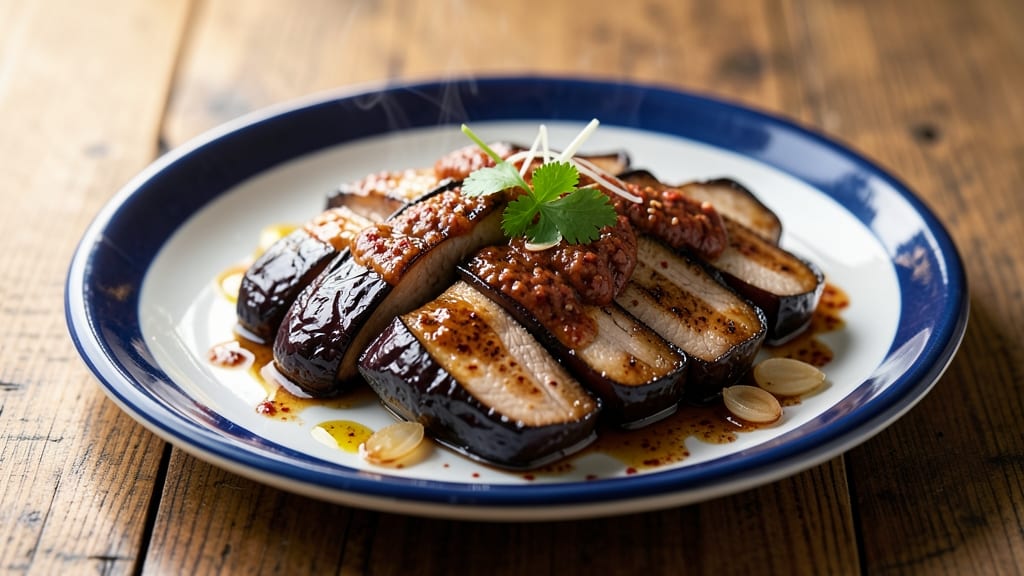
This miso pork and eggplant recipe transforms humble ingredients into a restaurant-quality umami masterpiece with silky eggplant and tender pork infused with fermented depth. 🌟 After perfecting it during my time in Charleston, where Japanese techniques met Southern flavors, I've refined it to balance bold miso notes with delicate eggplant texture—no shortcuts, just layers of flavor built through precise cooking methods.
The secret lies in the marination—pork shoulder gets its signature umami punch from a blend of white and red miso, mirin, and sake, while the eggplant develops its signature velvety texture through a quick sear and gentle braise.
This dish delivers restaurant-quality results without requiring advanced skills, making it perfect for weeknight dinners that feel like special occasions.
By the time you plate this dish, you'll have perfectly caramelized pork slices with tender yet firm texture, alongside eggplant bites that are silky inside with just a hint of crispness at the edges.
The miso glaze ties everything together, creating a sauce that's both sticky and balanced—sweet, salty, and deeply savory all at once.
Serve it over steamed jasmine rice to soak up every last drop of that rich miso sauce, or pair with quick-pickled vegetables for brightness. The leftovers reheat beautifully, making this an ideal meal for busy weeks when you still want to eat well.
Let's get cooking—this dish is worth every minute of preparation.
Ingredients for miso pork eggplant
Restaurant-quality umami starts with these 15 ingredients—each playing its part in the perfect balance.
| Ingredient | Amount | Notes |
|---|---|---|
| Japanese Eggplant 🍆 | 2 whole | Medium-sized, unpeeled |
| Pork Shoulder 🥩 | 1 ½ lb | Boneless, cut into 1-inch slices |
| White Miso Paste 🍶 | ⅓ cup | High-quality, fermented |
| Red Miso Paste 🍶 | 0.17 cup | For deeper umami balance |
| Dry White Wine 🍷 | ¼ cup | Sauvignon Blanc preferred |
| Mirin 🍶 | 2 tbsp | Sweet rice wine, not imitation |
| Sake 🍶 | 2 tbsp | Dry, not sweet |
| Sesame Oil 🫒 | 1 tbsp | Toasted, for aroma |
| Soy Sauce 🍶 | 2 tbsp | Kosher salt-reduced preferred |
| Honey 🍯 | 1 tbsp | Light, for balance |
| Garlic Cloves 🧄 | 4 cloves | Minced, fresh preferred |
| Ginger 🌿 | 1 tbsp | Fresh, grated |
| Neutral Oil 🫒 | 2 tbsp | Avocado or vegetable oil |
| Jasmine Rice 🍚 | 1 ½ cups | Uncooked, long-grain |
| Sesame Seeds 🌰 | 1 tbsp | Toasted, for garnish |
The miso pastes are non-negotiable for authentic depth. Marukome or Honten brands deliver consistent quality, but any high-end Japanese grocery store will have solid options. White miso keeps the profile bright, while red adds that signature richness. For the pork, bone-in shoulder (like from Whole Foods) stays juicier, but boneless works too—just don't skip the 24-hour marinating time. Eggplant? Japanese varieties (like Asian markets) are less bitter and hold their shape better than Italian types. If you can't find them, regular eggplant works—just salt and drain them first to remove excess moisture.
No mirin? Equal parts dry sherry and sugar mimics the sweetness, though you'll lose some complexity. Sake substitute? Dry white wine works in a pinch, but reduce to 1 tbsp. The sesame oil is all about aroma—don't cook with it, just swirl it in at the end. For the honey, avoid dark varieties like buckwheat—they'll overpower the delicate balance. Fresh ginger and garlic can be swapped for powders at half the amount, but toasted sesame seeds have no substitute for that nutty crunch. And if your soy sauce is salty? Dilute it with water before measuring.
Marinated pork keeps 3 days in the fridge—use it all or freeze portions for 3 months. Cooked eggplant reheats beautifully but gets mushy, so reheat only what you'll eat immediately. The miso marinade doubles as a sauce—store it in a jar in the fridge for 1 week. For extra prep: cook the rice in advance and reheat with a splash of water. The sesame seeds? Toast them in a dry pan for 30 seconds—they'll keep for 6 months in an airtight container. This dish tastes even better the next day as flavors meld.
Why You'll Love This Recipe
- One-Pan Magic: I swear by this recipe when I’m too tired to juggle a million dishes. The eggplant and pork shoulder go right into the same pan—no chopping boards, no extra bowls—just a single sheet pan that I can slide straight into the oven. (Yes, even on a Tuesday night.)
- Umami Bomb: Between us, this combo of white and red miso is next level. The white miso gives that deep, savory richness, while the red adds a subtle sweetness that makes every bite taste like a little flavor party. And that dry white wine? It cuts through the richness like a breath of fresh air.
- Leftovers That Don’t Suck: I make this on Sundays because it reheats like a dream—no soggy eggplant, no dry pork. The miso keeps it moist, and the pork stays tender, so I’m eating this for lunch all week. Honestly, it’s one of those rare dishes where leftovers feel like a gift, not a chore.
- Budget-Friendly Feast: Pork shoulder is cheap, eggplant is cheap, and a little miso goes a long way. I stretch this into three meals for my family, and no one complains—because it’s just that good. Plus, the wine adds a fancy touch without breaking the bank. Win-win.
Step-by-step instructions for miso pork and eggplant
This umami-rich dish delivers tender pork, silky eggplant, and a perfect balance of sweet and salty flavors.
🍳 Step 1: Prepare the Japanese Eggplant for Silky Texture
Cut the 2 whole Japanese eggplant lengthwise into ½-inch thick slices, leaving the skin intact. Arrange them on a baking sheet lined with parchment paper, skin-side down. Drizzle lightly with 1 tablespoon sesame oil and sprinkle with a pinch of salt. Roast at 375°F for 15 minutes until the edges begin to soften but the centers still hold their shape.
Here's the thing—Japanese eggplant has fewer seeds than regular eggplant, which means it stays silky when cooked. Roasting first removes bitterness and creates that signature tender bite. Flip the slices halfway through cooking so they brown evenly on both sides. You'll know they're ready when a paring knife slides in easily but still offers slight resistance.
👨🍳 Step 2: Marinate the Pork Shoulder in Miso and Aromatics
In a mixing bowl, combine the 1.5 lb pork shoulder slices, 0.33 cup white miso paste, 0.17 cup red miso paste, 2 tablespoons soy sauce, 1 tablespoon honey, 4 minced garlic cloves, and 1 tablespoon grated ginger. Mix thoroughly until the miso paste coats the pork evenly. Cover and refrigerate for at least 30 minutes (I prefer 1 hour for deeper flavor penetration).
The miso paste does double duty here—it tenderizes the pork while infusing it with that signature umami punch. Don't skip the marinating time; this is where the magic happens. The red miso adds depth, while the white miso keeps the flavor balanced. The honey here isn't just for sweetness—it helps caramelize the pork during cooking.
🔥 Step 3: Cook the Pork Until Tender and Glazed
Heat 2 tablespoons neutral oil in a large skillet over medium-high heat. Add the marinated pork shoulder and cook for 4-5 minutes per side until browned. Reduce heat to medium-low, cover, and simmer for 20-25 minutes until the pork reaches 160°F internally and is fork-tender.
Here's where it gets fun—after the initial sear, pour in 0.25 cup dry white wine, 2 tablespoons mirin, and 2 tablespoons sake. Let it simmer for 3-4 minutes until reduced by half. This creates a glossy glaze that coats the pork beautifully. The alcohol burns off, leaving behind concentrated flavor. If the sauce reduces too quickly, add 1-2 tablespoons water to maintain the glaze.
🥘 Step 4: Assemble and Glaze the Eggplant
Return the roasted eggplant slices to the skillet with the cooked pork. Spoon the reduced wine mixture over everything and simmer for 2-3 minutes until the eggplant absorbs the glaze and becomes glossy. The eggplant should be tender but still hold its shape—it's ready when it's just warm through.
This is the moment that matters: the eggplant absorbs all that umami goodness from the pork and sauce, creating those signature silky bites. If the eggplant seems too dry, add 1 tablespoon sesame oil to the pan and toss everything together. The contrast between the tender pork and the velvety eggplant is what makes this dish special.
🍽️ Step 5: Serve Over Jasmine Rice with Garnish
Cook the 1.5 cups jasmine rice according to package instructions (usually 15 minutes in a rice cooker). Divide the rice among serving plates, then top with the pork and eggplant mixture. Drizzle any remaining sauce from the pan over the top and sprinkle with 1 tablespoon toasted sesame seeds for texture and aroma.
Real talk: this dish tastes even better the next day as the flavors meld. The rice soaks up all that delicious sauce, and the eggplant becomes even more tender. Serve with a simple cucumber salad to cut through the richness. Each bite delivers layers of umami from the miso, sweetness from the honey, and that perfect balance of textures between the tender pork and silky eggplant.
Pro Tips For Making Miso Pork Eggplant
- CHAR THE EGGPLAINT FIRST: I used to rush this step and end up with mushy eggplant—don’t. After cutting into 1-inch chunks, toss them in a bowl with 1 tablespoon salt and let sit for 20 minutes. Flip them halfway. This pulls out bitterness and makes them crispy when seared later. (Yes, even if you’re impatient like me.)
- SEAR PORK IN BATCHES: Crowd the pan and you’ll steam the meat instead of browning it. Cut the pork shoulder into 1-inch cubes, then cook in 2 batches over medium-high heat with 1 tablespoon oil per batch. Wait until the first batch is deeply golden before adding the second—this builds real flavor.
- MIX MISO PASTES LAST: Red miso adds color and depth, but white miso’s milder taste can get lost if you mix them too early. Deglaze the pan with white wine first, then stir in the red miso paste until dissolved. Add the white miso last—this keeps its subtle sweetness from disappearing into the sauce.
- REST THE PORK AFTER BRAISING: I learned this the hard way—skipping the rest makes the meat dry out when sliced. After simmering with the miso sauce, turn off the heat and let the pork sit covered for 10 minutes. The residual heat finishes cooking it evenly, and the slices stay juicy. (Your future self will thank you.)
Troubleshooting this recipe
Eggplant Too Dry?
If your eggplant slices turn out dry or bitter, it's likely because they weren't properly prepped. Japanese eggplant has fewer seeds than regular varieties, but even it needs attention. First, salt the slices generously and let them sit for 10 minutes before cooking to draw out excess moisture.
Then, roast them skin-side down at 375°F for 12-15 minutes—this removes bitterness and creates that signature tender bite. If they still seem dry after cooking, toss them with 1 tablespoon sesame oil and a splash of the pork's glaze to restore moisture. 🌱
Pork Not Tender Enough?
The pork shoulder needs low-and-slow cooking to break down its tough fibers. If your slices are still chewy after 20-25 minutes of simmering, you likely skipped the marinating time or didn't reduce the sauce properly. Marinate for at least 1 hour (overnight is ideal) to tenderize the meat.
After searing, cover the pan and let the pork steam in its own juices—this is key. If it's still tough, add 2 tablespoons water or broth and simmer uncovered for another 10 minutes to finish cooking. 🥩
Sauce Too Salty?
Miso is naturally salty, and if your sauce tastes overwhelming, it's probably from the soy sauce or miso paste. To balance it, add 1 teaspoon honey or 1 tablespoon mirin to sweeten and mellow the flavors.
If that's not enough, stir in 1-2 tablespoons water or broth to dilute the saltiness without thinning the sauce too much. For future batches, reduce the soy sauce by ½ tablespoon—this small adjustment makes a big difference. 💧
Eggplant Overcooking?
Overcooked eggplant turns mushy, which happens when it sits too long in the pan or sauce. Once the eggplant is tender but still holds its shape, remove it from heat immediately.
If you're reheating leftovers, microwave for 20-30 seconds with a damp paper towel covering the plate—this prevents drying out. For extra insurance, undercook the eggplant slightly when assembling and let it finish warming through in the sauce. 🍆
Pork Too Dry After Cooking?
Dry pork usually means it lost moisture during cooking. To fix this, sear the pork on medium-high heat to create a crust, then reduce the heat to medium-low and cover the pan to trap steam.
If the pork still feels dry, baste it with the reduced wine mixture during cooking—this keeps it moist. For future batches, slice the pork thinner (¼-inch instead of ½-inch) so it cooks faster and retains more juices. 🔥
Flavor Too One-Note?
If your dish lacks depth, it might be missing the umami balance between white and red miso. White miso adds brightness, while red miso brings richness—use them in a 2:1 ratio (white to red). For extra complexity, add 1 teaspoon fish sauce or ½ teaspoon msg to the marinade.
If the flavors still feel flat, toast the sesame seeds until fragrant and sprinkle them over the dish at the end—they add a nutty aroma that ties everything together. 🌟
Nutrition facts
Frequently asked questions
Can I substitute regular eggplant for Japanese eggplant?
Yes, but with extra prep work! Regular eggplant has more seeds and moisture, so salt the slices and let them sit for 10 minutes before cooking to draw out excess water. Japanese eggplant stays silky with just roasting, while regular varieties need this extra step. If you're short on time, try smaller Italian eggplants—they're less bitter and hold shape better.
How do I make this recipe vegetarian?
Swap the pork for firm tofu or tempeh—press and marinate it in the same miso mixture for 30 minutes before cooking. For extra texture, use mushroom caps like portobello or shiitake. The eggplant preparation stays identical, and the miso glaze works perfectly with plant-based proteins. Just reduce cooking time by 5-7 minutes since tofu cooks faster than pork.
Can I make this recipe ahead of time?
Marinate the pork overnight for maximum flavor. The eggplant can be roasted 1 day ahead and stored in the fridge. Reheat gently in the sauce before serving. The dish actually tastes better the next day as flavors meld. For make-ahead meals, cook the rice separately and reheat with a splash of water to keep it fluffy.
What's the best way to store leftovers?
Store in an airtight container for up to 3 days in the fridge. The eggplant absorbs more sauce overnight, so add a splash of water when reheating. For longer storage, freeze the pork and eggplant separately (without rice) for up to 3 months1 minute with a damp paper towel to prevent drying.
How can I adjust the heat level?
The red miso already adds depth, but for extra heat, add ½ teaspoon chili flakes or 1 teaspoon gochujang to the marinade. For a milder version, reduce the red miso to 0.1 cup and increase white miso to 0.4 cup. The honey naturally balances any spice, so adjust it last—½ teaspoon at a time until you reach your preferred sweetness level.