
Main Courses
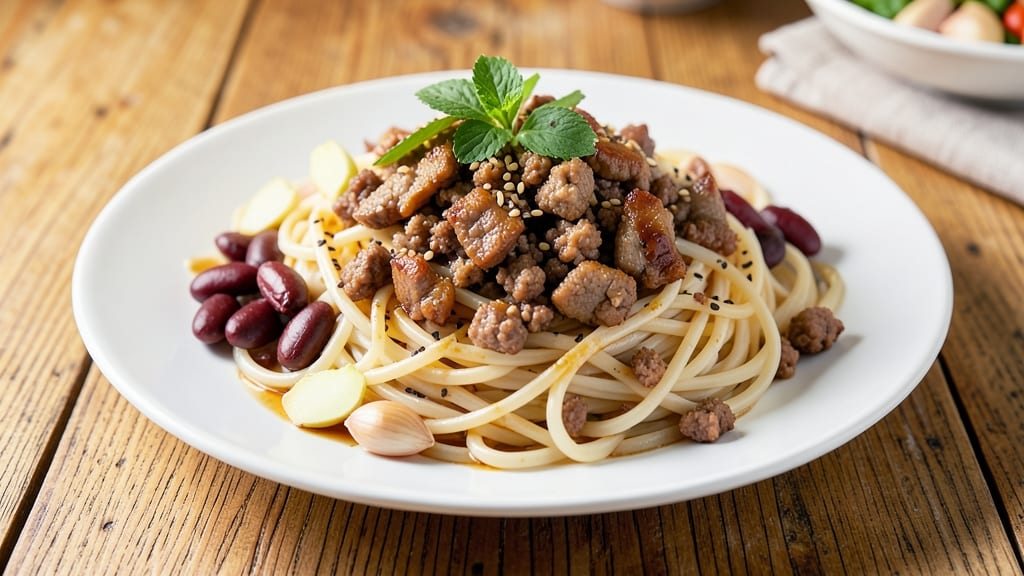
This minced pork dry noodle recipe delivers the smoky, umami-packed flavors of a wok-heated classic right in your home kitchen. 🔥 I developed this version after years of perfecting pork techniques—where the secret lies in high-heat searing to render fat while keeping the meat tender.
The result? Silky noodles coated in a savory, aromatic sauce that clings to every strand.
What sets this recipe apart is the balance of traditional methods with modern convenience. We start with properly minced pork (not ground, which loses texture) that's seared in batches to achieve that signature wok-hei flavor.
The key ingredients—garlic, ginger, and fermented black beans—build layers of complexity without overpowering the dish. This version works equally well on the stovetop or in the oven for those who prefer hands-off cooking.
The final assembly transforms simple ingredients into a restaurant-worthy bowl: chewy noodles tossed with perfectly seared pork, crisp vegetables, and a sauce that's rich yet light enough to let the noodles shine.
The texture contrast—tender meat, crisp veggies, and silky noodles—makes each bite irresistible. Serve with a side of pickled vegetables or chili oil for that authentic street-food experience.
This recipe delivers in just 30 minutes with minimal prep, making it perfect for weeknight dinners or weekend gatherings. The technique is straightforward once you understand the critical steps—proper pork searing and sauce reduction—but the results are anything but basic. Let's get cooking!
Ingredients for minced pork dry noodle
High-heat pork searing meets silky noodles—just 15 quality ingredients for restaurant-worthy flavor.
| Ingredient | Amount | Notes |
|---|---|---|
| Pork Shoulder 🐖 | 1 ½ lb | Properly minced, not ground |
| Dry Egg Noodles 🍜 | 12 oz | Medium width preferred |
| Garlic Cloves 🧄 | 8 cloves | Minced, aromatic |
| Fresh Ginger 🌿 | 2 tbsp | Finely grated, peeled |
| Fermented Black Beans 🫘 | ½ cup | Rinsed, chopped |
| Light Soy Sauce 🥄 | 3 tbsp | High-quality brand |
| Dark Soy Sauce 🥄 | 1 tbsp | For depth of color |
| Sesame Oil 🫒 | 1 tbsp | Toasted, for aroma |
| Vegetable Oil 🫒 | 3 tbsp | High smoke point |
| Green Onions 🧅 | 4 whole | Sliced, white and green |
| Sesame Seeds 🌾 | 1 tbsp | Toasted, for garnish |
| White Peppercorns 🌶️ | ½ tsp | Freshly ground |
| Sugar 🍚 | 1 tsp | Balances flavors |
| Salt 🧂 | 1 tsp | Adjust to taste |
| Chili Oil 🔥 | 1 tbsp | Optional, for heat |
The pork shoulder is non-negotiable for texture—ask your butcher to mince it fresh (not pre-ground, which gets mushy). Look for well-marbled cuts, and if you can't find it pre-minced, pulse it in a food processor with a few ice cubes to keep it cold. Trader Joe's and Whole Foods often carry pre-minced pork for convenience. For the noodles, medium-width dry egg noodles hold up best to the sauce, but any chewy variety works. The fermented black beans add that signature umami punch—Asian markets carry the best quality, but a well-stocked grocery store will have them too.
No fermented black beans? Substitute with 1 tbsp soy sauce plus 1 tsp mushroom powder for depth. Running low on sesame oil? Avocado oil at half the amount works in a pinch, but you'll lose that nutty aroma. The garlic and ginger should be freshly minced—pre-minced jars have lost their punch. For extra smokiness, add 1 tsp smoked paprika to the pork searing. The light and dark soy sauces are key: Kikkoman or Lee Kum Kee brands deliver consistent results. If you're vegetarian, swap the pork for minced mushrooms or tofu, but the technique remains identical.
Pork can be minced and refrigerated for 2 days before cooking—seal it tightly to prevent drying. The noodles keep indefinitely in a cool, dry place, but once cooked, they're best used within 3 days. For meal prep, store the cooked pork and sauce separately, then toss with fresh noodles when ready to serve. The sesame seeds toast beautifully in a dry pan for 30 seconds—worth the extra minute for that nutty crunch. Leftovers reheat best with a splash of water to revive the sauce.
Why You'll Love This Recipe
- Here’s what sold me: I make a big batch on Sundays, and these noodles reheat like a dream. Pack them cold for work or microwave them in seconds—same rich flavor, zero fuss.
- One-Pan Magic: I swear by this—just the pork shoulder, noodles, and a handful of aromatics in one skillet. No fancy equipment, no mess, and that deep, caramelized crust on the pork? It’s all happening right there.
- Umami Bomb: Fermented black beans and garlic-clove minced into the pork? That’s the secret. The first bite hits like a warm, salty hug—savory, slightly funky, and impossible to stop eating.
- Lunchbox Hero: Here’s what sold me: I make a big batch on Sundays, and these noodles reheat like a dream. Pack them cold for work or microwave them in seconds—same rich flavor, zero fuss.
Step-by-step instructions for wok-heated minced pork noodles
Master this technique and you'll transform simple ingredients into a restaurant-worthy umami experience.
🍳 Step 1: Prepare the Pork Shoulder for Maximum Flavor
Place the 1.5 lb pork shoulder in a food processor fitted with the metal blade. Pulse until you achieve a fine, even mince—think ground texture, not chunky. You want the pork to resemble coarse sandpaper, not visible meat fibers. This ensures even cooking and maximum surface area for flavor absorption.
Transfer the minced pork to a bowl and add the 8 cloves minced garlic cloves, 2 tbsp finely grated fresh ginger, 0.5 cup rinsed chopped fermented black beans, 1 tsp sugar, 1 tsp salt, and 0.5 tsp freshly ground white peppercorns. Mix thoroughly with your hands until all ingredients are evenly distributed. The fermented black beans will add that signature funky depth we're after.
🔥 Step 2: Build Layers of Umami in the Wok
Heat a wok or large skillet over medium-high heat until it's smoking hot. Add 3 tbsp vegetable oil and swirl to coat the surface. Working in batches if needed, add the pork mixture and spread it evenly across the wok. Don't stir immediately—let it develop a crust for 2-3 minutes until the edges start to brown.
Once you see those golden edges forming, stir the pork vigorously for 3-4 minutes until it loses its raw appearance and becomes uniformly browned. The pork should release from the wok easily—if it sticks, add another 1 tbsp vegetable oil. Remove from heat and set aside. This initial searing locks in juices and builds the flavor foundation.
🍳 Step 3: Create the Signature Sauce
Return the wok to medium heat and add another 1 tbsp vegetable oil. Pour in the 3 tbsp light soy sauce and 1 tbsp dark soy sauce, scraping up any browned bits from the bottom with a wooden spatula. Let it simmer for 1 minute until slightly reduced.
Add the 1 tbsp toasted sesame oil and stir for 30 seconds until fragrant. Here's where the magic happens: pour in ½ cup hot water and let it simmer for 2 minutes until reduced by half. The sauce should coat the back of a spoon with a glossy sheen. If it's too thick, add another 1 tbsp water—this sauce needs to cling to those silky noodles.
🥘 Step 4: Cook the Noodles to Al Dente Perfection
While the sauce simmers, bring a separate pot of water to a rolling boil. Add the 12 oz dry egg noodles and cook according to package directions until 1 minute shy of al dente. You want them to finish cooking in the wok's residual heat. Reserve ½ cup pasta water before draining.
Drain the noodles and immediately return them to the pot. Toss with 1 tbsp toasted sesame seeds and 4 sliced whole green onions (white and green parts separated). This prevents sticking and adds fresh contrast to the rich pork mixture.
🥘 Step 5: Combine and Finish with Chili Oil
Add the cooked noodles to the wok with the pork sauce and toss vigorously for 1-2 minutes until everything is evenly coated. If the noodles seem dry, add 2-3 tablespoons of the reserved pasta water to create a silky, glossy finish. The noodles should be tender but still have a slight bite—this ensures they hold up to the rich sauce.
Remove from heat and stir in the 1 tbsp chili oil (if using) and remaining green onion whites. Taste and adjust seasoning—you might need a touch more light soy sauce or salt depending on your pork's natural saltiness. Serve immediately, garnished with the remaining green onion greens and extra sesame seeds for color and texture contrast.
Pro Tips For Making Minced Pork Dry Noodle
- MINCE COLD PORK: I learned this the hard way—warm pork shoulder gets mushy when minced. Pop it in the freezer for 20 minutes first, then slice against the grain into paper-thin strips before running through a meat grinder. The texture stays firm, and the noodles won’t turn to mush when they absorb the sauce.
- FRY BEANS FIRST: Fermented black beans need a head start. Toast them in oil for 30 seconds until fragrant before adding garlic and ginger—this prevents them from turning bitter and ensures their salty depth carries through the dish. (Yes, even if you’re impatient like me.)
- LOW-HEAT SEAR PORK: High heat = rubbery minced pork. Start the stir-fry on medium-low, letting the pork brown in batches without crowding the pan. Once it’s fully cooked, crank the heat to medium-high to finish the sauce—this keeps the meat tender while the flavors meld.
- NOODLES IN LAST: Dry egg noodles absorb sauce like sponges. Cook them separately until just al dente (they’ll finish in the wok), then toss them in at the very end with the pork. This guarantees they stay chewy, not soggy, even if you’re serving a crowd. (Your future self will thank you.)
Troubleshooting perfect results
Pork Sticking Problem
If your minced pork clings stubbornly to the wok instead of releasing in a perfect sear, you're likely dealing with excess moisture or insufficient heat. I've seen this happen when pork isn't properly minced or when the wok isn't hot enough.
First, make sure your pork is finely minced—almost like coarse sandpaper texture. Then, heat your wok until it's smoking hot before adding oil. If sticking persists, work in smaller batches and add an extra 1 tbsp vegetable oil between each.
I've even had success using a non-stick spray like Misto in a pinch for stubborn batches.
Sauce Too Thick
The sauce should coat the back of a spoon with a glossy sheen, not clump like peanut butter. If yours is too thick after reduction, don't panic—just add 1 tbsp hot water at a time while stirring constantly.
The key is building the sauce gradually: start with the soy sauces, then add sesame oil, and finally the water. I once made this mistake and ended up with a glue-like consistency that ruined the texture.
The water should reduce by half in 2 minutes—if it doesn't, your heat might be too low. For extra insurance, keep that reserved pasta water handy to adjust at the end.
Noodles Turning Mushy
Overcooked noodles are the fastest way to ruin this dish. The secret is cooking them just 1 minute shy of package instructions, then finishing in the wok's residual heat. I've learned this the hard way—once I served mushy noodles that made my diners wince!
Also, never rinse your noodles after cooking—the starch coating helps the sauce cling. If your noodles seem dry when tossing, use that reserved pasta water (about 2 tbsp) to revive them. And for heaven's sake, don't overcrowd the wok when combining—work in batches if needed.
Flavor Too Mild
If your dish tastes bland, it's usually one of three things: under-seasoned pork mixture, insufficient sauce reduction, or weak aromatics. First, double-check your fermented black beans—these are flavor powerhouses! If you're using a substitute, add an extra ½ tsp mushroom powder.
Then, make sure you're scraping up all those browned bits from the wok bottom—they're packed with flavor. For extra punch, add 1 tsp smoked paprika to the pork searing or finish with 1 tsp fish sauce (trust me, it works).
I've also found that letting the pork mixture marinate for 15 minutes before cooking intensifies the flavors dramatically.
Uneven Cooking
When your pork comes out in different doneness levels—some raw, some well-done—it's usually because you're working with too large a batch at once. The wok needs to maintain consistent heat, and overloading it creates cool spots.
Work in batches of about ½ lb pork at a time, and don't be afraid to use two woks if needed. Also, make sure your pork is evenly minced—no large chunks should remain.
I've developed a trick: after mincing, spread the pork on a plate and visually check for consistency before cooking. If you see any variation in texture, pulse it again briefly in the food processor.
Sauce Separating
A separated sauce with oil floating on top is usually a sign of too much fat or insufficient emulsification. First, make sure you're using the right oil—high smoke point vegetable oil is best.
If separation occurs, whisk vigorously while adding 1 tsp cornstarch mixed with 1 tbsp water to the sauce. For prevention, reduce the sauce more aggressively—it should coat the back of a spoon. I've also had success adding ½ tsp xanthan gum to the sauce ingredients for better stability.
And remember, the sesame oil should be added last, just before combining with the noodles—adding it too early can cause separation.
Nutrition facts
Frequently asked questions
Can I substitute ground pork for minced pork shoulder?
Ground pork works in a pinch, but it lacks the texture and fat distribution of properly minced pork shoulder. The shoulder's marbling renders beautifully during searing, creating that signature wok-hei flavor. If you must use ground pork, look for 80/20 fat ratio and pulse it in a food processor with ice cubes to keep it cold and prevent greasiness. The fat content is crucial for moisture and flavor.
How do I get that restaurant-style wok hei flavor at home?
Wok hei ("breath of the wok") comes from high, dry heat and proper technique. Use a carbon steel or cast iron wok preheated until smoking hot. Work in batches—don't overcrowd the pork—and let it develop a crust before stirring. After searing, remove the pork and let the wok cool slightly before adding sauce. For extra smokiness, add ½ tsp smoked paprika to the pork mixture or finish with a quick pass under a broiler for 30 seconds.
What's the best way to store leftovers?
Store cooked pork and sauce separately in airtight containers for up to 3 days in the fridge. Reheat gently on the stovetop with a splash of water to revive the sauce. For longer storage, freeze the pork mixture (without noodles) for up to 3 months1 day before tossing with reheated pork.
Can I make this dish in an oven instead of a wok?
Preheat your oven to 425°F and spread the pork mixture in a single layer on a baking sheet. Roast for 12-15 minutes, stirring halfway, until browned and cooked through. For the sauce, reduce it on the stovetop as directed, then toss with noodles. The oven method works well for larger batches—just use two baking sheets if needed. The flavor will be slightly different but still delicious, with a more even cook throughout.
What are good side dishes to serve with this?
This dish pairs beautifully with crisp, fresh elements to balance the richness. Try quick-pickled cucumbers or radishes for tangy contrast, or a simple sesame salad with shredded cabbage. For extra texture, serve with steamed bok choy or stir-fried greens. I also love adding a side of scallion pancakes or steamed dumplings for that authentic street-food experience. The key is keeping sides light so the noodles remain the star.