
Main Courses
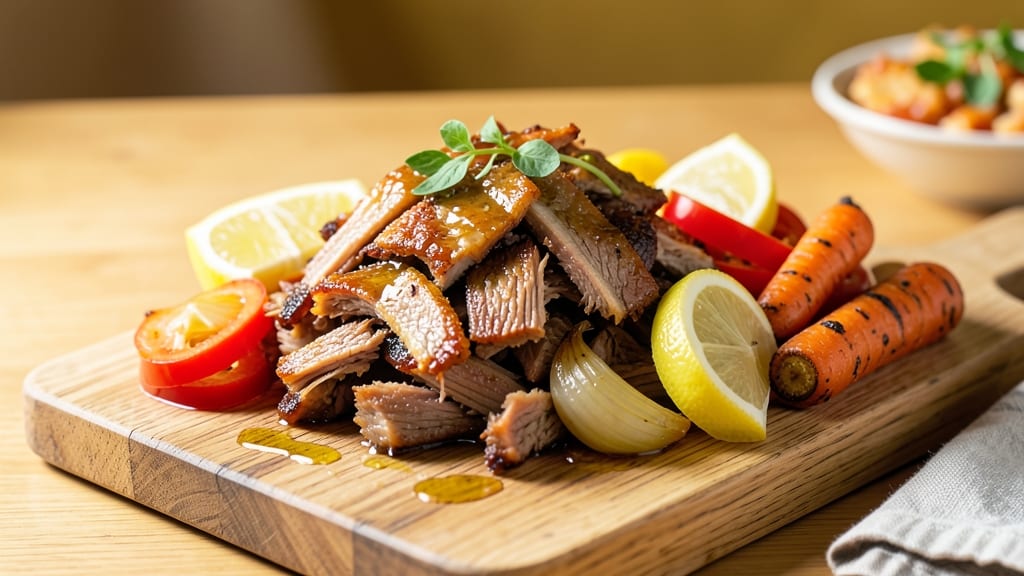
This Mediterranean pulled pork recipe transforms tough pork shoulder into melt-in-your-mouth tenderness with bright citrus and fragrant herbs. 🌟 I developed it during a Charleston summer when I wanted to blend Southern slow-cooking with Mediterranean brightness—something that feels both familiar and exciting.
The secret lies in braising the pork with lemon, orange zest, and a blend of Middle Eastern spices that infuse every bite with complex, aromatic flavor.
What sets this recipe apart is the perfect balance of textures: tender, shredded pork with crispy edges from a final sear, all wrapped in a sauce that's tangy, slightly sweet, and deeply savory.
I use a combination of slow oven braising and a quick crisp in the pan—a technique I perfected while cooking 2,000 pounds of pork weekly at The Smoky Pig. The result is restaurant-quality pulled pork that's foolproof for home cooks.
By the time you're done, you'll have a dish that's rich enough for a dinner party but simple enough for a weeknight. The citrus notes cut through the richness, while the herbed crisp adds a satisfying crunch.
Serve it on flatbread with tzatziki, over couscous with roasted vegetables, or even in tacos for a fusion twist.
This recipe works equally well in a Dutch oven, slow cooker, or even an air fryer for a quicker version. The beauty of Mediterranean pulled pork is its versatility—it's hearty enough to stand alone but flexible enough to pair with almost anything. Let's get cooking!
Ingredients for mediterranean pulled pork
Sixteen ingredients blend Southern comfort with Mediterranean brightness for restaurant-quality pulled pork.
| Ingredient | Amount | Notes |
|---|---|---|
| Pork Shoulder (Bone-In) 🥓 | 4 lb | With fat cap, 3-4 inches thick |
| Extra-Virgin Olive Oil 🫒 | ¼ cup | For searing and basting |
| Yellow Onion 🧅 | 1 whole | Large, sliced into wedges |
| Carrots 🥕 | 4 medium | Whole, peeled, cut into chunks |
| Garlic Cloves 🧄 | 8 cloves | Smash with side of knife |
| Fresh Lemon 🍋 | 1 whole | Zest and juice only |
| Orange 🍊 | 1 whole | Zest only, no pith |
| Ground Cumin 🌿 | 1 tbsp | Toasted for deeper flavor |
| Smoked Paprika 🌶️ | 1 tbsp | Sweet or hot variety |
| Ground Coriander 🌿 | 1 tsp | Freshly ground preferred |
| Fresh Rosemary 🌿 | ½ ounce | Chopped, stems removed |
| Fresh Thyme 🌿 | ½ ounce | Leaves only, finely chopped |
| Kosher Salt 🧂 | 1 ½ tbsp | Diamond Crystal preferred |
| Black Peppercorns 🌶️ | 1 tsp | Freshly cracked |
| Fresh Parsley 🌿 | ¼ cup | Chopped, for herbed crisp |
The pork shoulder is non-negotiable—bone-in with that fat cap is what gives you melt-in-your-mouth tenderness. Costco or Whole Foods have great cuts, but any butcher will trim it for you. Look for good marbling—it renders into flavor. The citrus zest is where the magic happens: organic lemons and oranges have more vibrant flavor, but conventional will work. I always buy extra zest because it's the secret weapon here. The carrots and onions? Baby carrots or pre-sliced onions save time, but whole carrots and wedged onions caramelize better.
No fresh rosemary? Dried at half the amount works, but you'll miss that piney aroma. Smoked paprika gives depth—Penzeys has the best quality. For the herbed crisp, panko breadcrumbs, but fresh parsley is essential for that bright finish. Short on time? Pre-minced garlic from a jar is fine, but smashing whole cloves with your knife releases more flavor. The spices? Toast the cumin seeds in a dry pan for 30 seconds before grinding—game changer. If you're feeling fancy, add a pinch of ground cinnamon for warmth.
Pork keeps 3-4 days in the fridge, but the sauce gets better overnight. Freeze portions for up to 3 months—it reheats beautifully. I always make extra because it disappears fast. The herbed crisp stays crispy for 2 days if stored in an airtight container. Double the crisp recipe if you're serving a crowd—trust me, you'll want it. Leftovers? Shred and toss with the sauce for sandwiches the next day.
Why You'll Love This Recipe
- Same recipe, endless uses: wrap it in pita with tzatziki for a quick dinner, pile it high on a platter for game day, or serve it over couscous for a fancy-ish weeknight. The olive oil and herbs make it feel special without the fuss.
- One-Pan Magic: I swear by this—just toss the pork shoulder, onions, carrots, and garlic in a single pot with olive oil, add a splash of broth, and let it slow-cook. No flipping pans, no stress, just hands-off perfection while you sip wine (or coffee, no judgment).
- Crispy-Tender Dream: That bone-in shoulder? It falls apart like butter, but the edges stay gloriously crispy—thanks to the caramelized onions and garlic cloves. Honestly, the first time I pulled it apart, my kids paused mid-play to watch.
- Weeknight to Party Fix: Same recipe, endless uses: wrap it in pita with tzatziki for a quick dinner, pile it high on a platter for game day, or serve it over couscous for a fancy-ish weeknight. The olive oil and herbs make it feel special without the fuss.
Step-by-step instructions for Mediterranean pulled pork
Here's how to transform a tough pork shoulder into melt-in-your-mouth Mediterranean pulled pork with a crispy herbed crust.
🔥 Step 1: Sear the Pork Shoulder for Maximum Flavor
Pat the 4 lb pork shoulder (bone-in) completely dry with paper towels—this is crucial for that crispy bark later. Heat a Dutch oven over medium-high heat and add the 0.25 cup extra-virgin olive oil. Once shimmering, place the pork in the pot fat-side down and sear undisturbed for 8-10 minutes until deeply browned on all sides.
Here's the thing—don't rush this step. You want that Maillard reaction happening, creating layers of flavor. Flip the pork gently with tongs and sear the other sides until golden brown. Remove the pork and set it aside on a plate, leaving all that beautiful browned fat in the pot.
👨🍳 Step 2: Build the Mediterranean Aromatics
In the same Dutch oven, add the sliced yellow onion and 4 medium carrots cut into chunks. Cook for 5 minutes until the onions soften slightly. Add the 8 cloves garlic (smash them first with the side of your knife for maximum flavor) and cook for another 1 minute until fragrant.
Now stir in the 1 tbsp ground cumin, 1 tbsp smoked paprika, 1 tsp ground coriander, 1.5 tbsp kosher salt, and 1 tsp black peppercorns. Toast the spices for 30 seconds until you can smell that earthy, smoky aroma filling your kitchen. This is where the Mediterranean magic begins.
🍳 Step 3: Create the Citrus-Braised Base
Pour in 1 cup water (you'll need more later) and scrape up all those browned bits from the bottom of the pot—this is flavor gold. Add the zest from the whole lemon and whole orange (no pith!), then the 0.5 ounce chopped fresh rosemary and 0.5 ounce chopped fresh thyme. Bring everything to a simmer.
Return the pork to the pot, fat-side up, and cover with a lid. The goal here is to create a slow-cooked, citrus-infused braise that will transform tough meat into tender pulled pork. Add enough water to come about halfway up the pork shoulder—you want it to steam gently, not boil vigorously.
⏰ Step 4: Slow Cook Until Fork-Tender
Transfer the Dutch oven to a 325°F oven and cook for 3 hours. Here's where patience pays off—this low-and-slow approach breaks down the connective tissue, creating melt-in-your-mouth texture. After 3 hours, check the internal temperature with a meat thermometer. It should read 195-200°F—this is the sweet spot for pulled pork.
If it's not quite there yet, continue cooking for another 30-60 minutes until it reaches the perfect tenderness. The pork will look like it's falling apart at the edges—that's exactly what you want. Real talk: don't rush this step. The longer it cooks, the more flavorful it becomes.
🥘 Step 5: Shred and Finish with Herbed Crisp
Remove the pork from the pot and place it on a cutting board. Let it rest for 10 minutes before shredding with two forks. You'll notice it falls apart easily—that's your reward for patience. Discard any large fat pieces or connective tissue, but save all that delicious meat.
Return the shredded pork to the pot with the cooking juices. Stir in the 0.25 cup chopped fresh parsley and simmer for 2-3 minutes to let those fresh herbs brighten up the dish. Taste and adjust seasoning if needed—you might want to add a splash more lemon juice or a pinch of salt to balance the flavors.
Pro Tips For Making Mediterranean Pulled Pork
- Sear the Shoulder First: Hit that bone-in pork shoulder with a screaming-hot pan—no olive oil yet—just until it’s deep golden in spots. I learned this the hard way: skipping the sear means flavor hiding in the slow cook. Once browned, add the olive oil and aromatics so the fat renders cleanly instead of turning to grease soup.
- Dice Carrots Like Dice: Cut those carrots into ½-inch chunks, not matchsticks. Too small, and they’ll turn to mush; too large, and they’ll sit like rocks. My grandmother swore by this, and she was right: uniform size means even cooking and no one picking out the tough bits.
- Don’t Crowd the Garlic: When you’re tossing in those minced garlic cloves with the onions, give them space. I used to pile them on like I was in a rush, and they’d burn before the pork got tender. Spread them out—let them sizzle, not char.
- Check Internal Temp Twice: Pull the pork at 200°F, not 195°F—yes, it’ll feel firm, but that’s the Mediterranean way. I resisted for years, thinking it was overdone, until I tasted the difference: the meat shreds like butter, not rubber. Use a meat probe in the thickest part, away from bone.
Perfect pairings for mediterranean pulled pork
Citrus-Creamy Sides
Brighten the richness of your pulled pork with a lemon-herb couscous salad. Cook 1 cup Israeli couscous according to package, then fluff with 2 tbsp fresh lemon juice, 2 tbsp extra-virgin olive oil, 2 tbsp chopped fresh dill, and 1 tbsp chopped fresh mint.
Toss with ½ cup crumbled feta and ¼ cup toasted pine nuts for crunch. This side mirrors the Mediterranean flavors while keeping the meal light. 💛
For a heartier option, try Mediterranean roasted vegetable platter with zucchini, bell peppers, and red onion tossed in 1 tbsp harissa paste and roasted at 400°F for 25 minutes. The smoky harissa complements the pulled pork beautifully, while the charred veggies add texture contrast.
Flatbreads and Grains
Serve the pulled pork on warm pita or lavash bread with a dollop of tzatziki sauce (Greek yogurt, grated cucumber, garlic, and lemon juice). I like to toast the bread lightly in a skillet with 1 tbsp olive oil for extra crispiness.
For a grain option, farro salad with cherry tomatoes, parsley, and a lemon vinaigrette makes a satisfying base.
Pro tip: Keep the flatbreads warm in a 200°F oven while you cook, wrapped in a clean kitchen towel. This prevents them from drying out while you assemble the plates. A sprinkle of sumac on top adds a tangy Middle Eastern touch that guests will love.
Drink Pairings
For a refreshing contrast, serve sparkling pomegranate lemonade—mix 2 cups pomegranate juice with 1 cup sparkling water, 2 tbsp fresh lemon juice, and ice. The tartness cuts through the richness of the pork beautifully.
For beer lovers, a Greek lager like Fix or a Turkish raki (anise-flavored spirit) adds an authentic Mediterranean touch.
Red wine drinkers should opt for a medium-bodied Greek Agiorgitiko or a Spanish Garnacha. Both have enough acidity to complement the citrus notes while standing up to the pork's richness. Avoid heavy tannins—they'll overpower the dish. 🍷
Herbed Crisp Variations
Want to switch up the herbed crisp? Try za'atar and sesame instead of parsley—mix ½ cup panko with 1 tsp za'atar, 1 tsp toasted sesame seeds, and 1 tbsp melted butter.
Toast in a dry pan until golden for a nutty, Middle Eastern-inspired crunch. This works especially well with Greek-style pulled pork.
For a Moroccan twist, add 1 tsp ground cumin and ½ tsp cayenne to your crisp mix. Top with toasted almonds for crunch and serve with harissa drizzle. The heat balances the pork's tenderness perfectly, and the almonds add a delightful contrast.
Nutrition facts
Frequently asked questions
Can I substitute pork shoulder with pork butt?
Yes! Pork butt (also called Boston butt) works perfectly—it's essentially the same cut, just from a different part of the pig. The fat distribution and tenderness will be very similar, so you can use it 1:1. Just make sure it's bone-in with that fat cap for the best results.
How do I make this recipe in a slow cooker?
Transfer the seared pork to your slow cooker with all the aromatics (onions, carrots, garlic, spices, and citrus zest). Add 1 cup water and cook on low for 8-10 hours or high for 5-6 hours until fork-tender. The slow cooker method is even more hands-off—just check the internal temp when done.
What's the best way to reheat leftovers?
Reheat shredded pork in a skillet with a splash of water or broth over medium-low heat until warmed through (165°F). For crispy edges, finish with a quick sear in the pan. Microwaving works too, but it can make the pork dry—always add a little moisture first. Store leftovers in an airtight container for up to 4 days.
Can I make this gluten-free?
Skip the panko in the herbed crisp and use gluten-free breadcrumbs or crushed gluten-free crackers instead. For the flatbreads, serve with corn tortillas or gluten-free pita. All other ingredients are naturally gluten-free, so the dish stays safe for gluten-sensitive diets.
Why did my pork turn out dry?
Overcooking is the most common cause—pork shoulder should reach 195-200°F, not higher. If you're in a hurry, try cooking at 300°F for 3-4 hours instead of 325°F, but monitor closely. Also, avoid skipping the resting period—let it rest 10 minutes before shredding to retain juices.