Main Courses
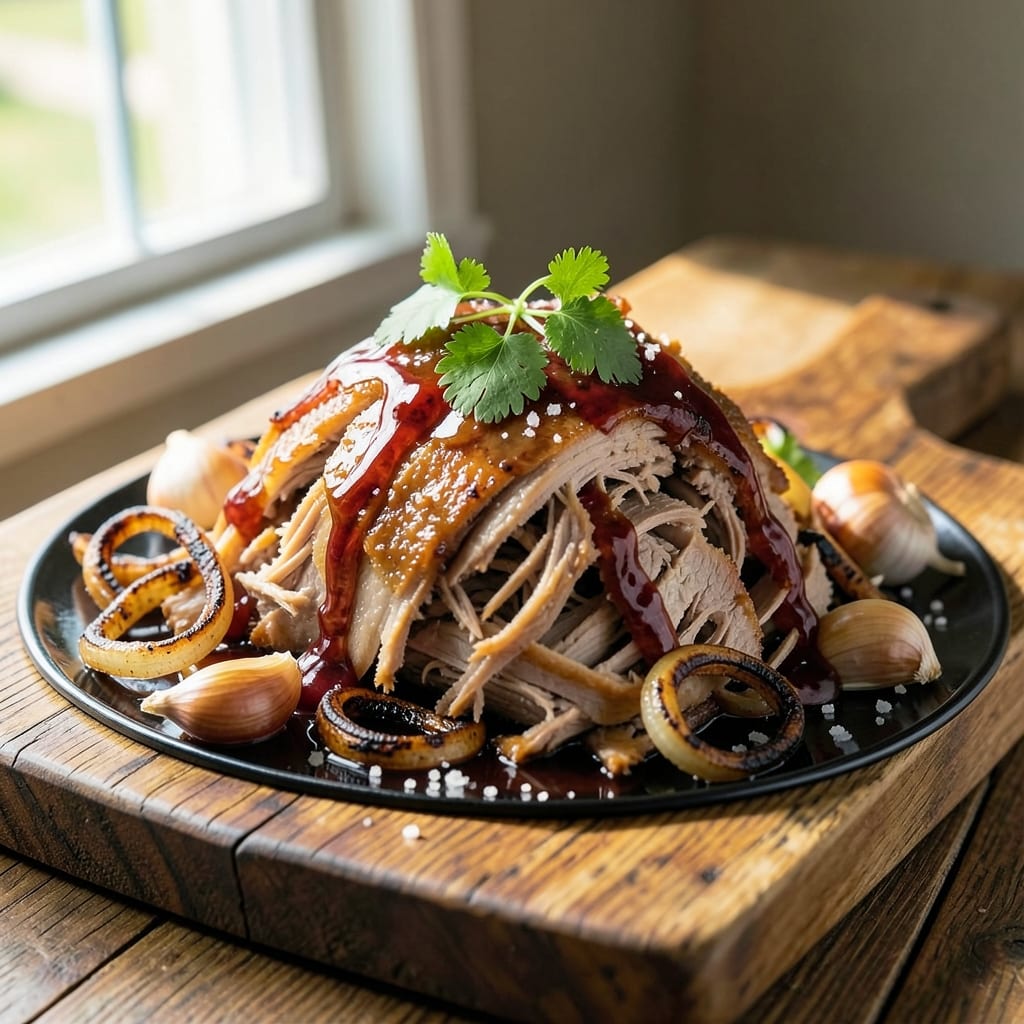
This best damn pulled pork recipe delivers melt-in-your-mouth tenderness with a perfect balance of smoky depth and tangy brightness—no shortcuts, just restaurant-quality results in 6 hours. I perfected this method after years of competing in BBQ championships, where the difference between "good" and "legendary" pork often comes down to two things: a proper brine and precise temperature control. The secret? A vinegar-kissed mop sauce applied every 90 minutes to keep the meat moist and develop layers of flavor that cut through the fat.
The process starts with a simple but effective brine that tenderizes the pork shoulder while infusing it with just enough salt to enhance, not overwhelm. From there, we cook low and slow—whether on a smoker, in the oven, or even a slow cooker—until the collagen breaks down into silky, pull-apart perfection. What sets this apart is the two-stage sauce application: a tangy vinegar-based mop during cooking, followed by a rich, smoky BBQ glaze at the end. This ensures every bite is juicy, flavorful, and packed with that signature Carolina-style bark.
By the time you're done, you'll have pulled pork so tender it practically shreds at a touch, with a caramelized crust that adds texture and depth. The key to avoiding common pitfalls—like dry meat or uneven cooking—lies in the temperature consistency and resting period, which allows the juices to redistribute. Serve it on toasted buns with pickles and coleslaw, or pile it high on a plate with cornbread and green beans. This isn’t just pulled pork; it’s the kind that earns standing ovations.
Whether you're feeding a crowd or prepping for leftovers, this recipe scales beautifully while maintaining foolproof results. The beauty of it? You can adapt the cooking method to fit your setup—smoker, oven, or even a slow cooker—without sacrificing quality. Let’s get to work, because once you taste this, you’ll never settle for anything less.
Ingredients for best damn pulled pork
Twelve ingredients, six hours, and a pork shoulder that practically melts in your mouth—this is the holy grail of BBQ.
| Ingredient | Amount | Notes |
|---|---|---|
| Pork Shoulder (Bone-In) 🐖 | 8 lb | Well-marbled, 3-4 inch thick |
| Yellow Onion 🧅 | 2 whole | Medium, sliced into wedges |
| Garlic Cloves 🧄 | 8 cloves | Fresh, peeled and smashed |
| Apple Cider Vinegar 🍎 | 1 cup | Raw, unfiltered preferred |
| Brown Sugar 🍯 | 1 cup | Light or dark, packed |
| Kosher Salt 🧂 | ½ cup | Diamond Crystal preferred |
| Black Peppercorns 🌶️ | 1 tbsp | Freshly cracked, coarse |
| Smoked Paprika 🌶️ | 2 tbsp | High-quality, Spanish preferred |
| Ground Black Pepper 🌶️ | 1 tsp | Freshly ground for heat |
| Apple Cider 🍎 | 2 cups | Unpasteurized for depth |
| Butter 🧈 | ½ cup | Unsalted, melted for mop |
| Chicken or Vegetable Broth 💧 | 1 cup | Low-sodium, for moisture |
| Honey 🍯 | 2 tbsp | Wildflower preferred |
| Wood Chips (Hickory or Apple) 🌳 | 2 cups | Soaked for 30 minutes |
| Yellow Mustard 🟡 | 1 tbsp | For final glaze tang |
The pork shoulder is your canvas—look for a well-marbled cut with good fat distribution at Costco or your local butcher shop. A bone-in shoulder stays juicier, but boneless works too if you're short on time. The apple cider vinegar and brown sugar combo is non-negotiable for that signature tangy-sweet balance. I always grab raw, unfiltered apple cider vinegar from Trader Joe's—it's got more depth than the pasteurized stuff. For the wood chips, hickory gives classic smokiness, but apple adds a subtle sweetness that pairs perfectly with the vinegar-kissed flavors. Don't skip the soaking—it prevents flare-ups and keeps the smoke steady throughout cooking.
No apple cider vinegar? White vinegar or lemon juice in a pinch, but you'll lose some complexity. Short on brown sugar? Maple syrup or agave works, though the flavor profile shifts slightly. The butter in the mop sauce is crucial—it keeps the meat moist and adds richness. If you're avoiding dairy, olive oil or avocado oil works just as well. For the final glaze, yellow mustard adds that signature tang, but Dijon or even a splash of hot sauce can stand in. The smoked paprika? Must be high-quality—cheap brands taste like sawdust. If you're using a smoker, soak the wood chips for at least 30 minutes before firing up to avoid burning them. And trust me on the freshly cracked black peppercorns—pre-ground loses its punch fast.
This pork reheats like a dream—better the next day once all the flavors meld together. Store leftovers in an airtight container for up to 5 days in the fridge, or freeze portions for 3 months. For serving, I like to portion it into meal prep containers with a little extra sauce on top—just microwave for 2-3 minutes until heated through. The bark? Don't peel it off—that's where all the flavor lives. If you're prepping for a crowd, double the recipe and cook it in batches to avoid overcrowding your smoker or oven. The secret to restaurant-quality results? Patience and precision—every 90 minutes of cooking deserves that mop sauce application.
Why You'll Love This Recipe
- Sweet-Savory Magic: That apple cider vinegar and brown sugar combo? It’s the secret weapon. The vinegar keeps it tangy while the caramelized sugar creates this perfect balance—smoky, sticky, and just sweet enough to make you lick your fingers. (Yes, I’ve been caught.)
- Weeknight to Party Star: Same recipe, endless uses. Slap it on buns for tacos on a Tuesday, load it into sandwiches for a Sunday brunch, or pile it high for a tailgate that’ll have your friends asking for the recipe. It’s the one dish that works for everything.
Step-by-step instructions for smoky, vinegar-kissed pulled pork
This isn't just pulled pork—it's the kind that melts like butter and sings with tangy depth. Here's how to make it.
🔥 Step 1: Build the Rub and Prep the Pork
In a large bowl, combine the 1 cup brown sugar, 0.5 cup kosher salt, 2 tbsp smoked paprika, 1 tbsp black peppercorns (coarsely cracked), and 1 tsp ground black pepper. Mix until the sugar and salt dissolve into the spices, creating a coarse paste. This isn't just seasoning—it's the foundation for that perfect bark and tender interior.
Pat the 8 lb pork shoulder completely dry with paper towels. I can't stress this enough—moisture is the enemy of crispy bark. Rub the spice mixture all over the pork, pressing it into every crevice. The fat cap should be well-coated but not buried under a thick layer. Let the pork sit at room temperature for 1 hour while you prep the rest.
🔥 Step 2: Smoke the Pork Low and Slow
Set up your smoker with the 2 cups soaked wood chips (hickory or apple) and preheat to 225°F. When the smoke is clean and steady, place the pork fat-side up on the grill grates. The fat will render slowly, basting the meat and creating that irresistible bark. Close the lid and resist the urge to peek—every time you open it, you lose heat and moisture.
Smoke for 4 hours, maintaining 225-230°F. You'll notice the internal temperature will rise slowly—this is where patience pays off. Around the 3-hour mark, check the temperature with a meat thermometer. It should be around 160°F, but don't rush it. The pork needs time to break down collagen into gelatin, which makes it tender.
🍳 Step 3: Add the Vinegar and Apple Cider
Here's where the magic happens: the tang. When the pork reaches 160°F, remove it from the smoker and place it in a large roasting pan. Pour 1 cup apple cider vinegar and 2 cups apple cider over the pork, then cover with foil. Return it to the smoker and continue cooking at 225°F for another 2 hours. The acidity tenderizes the meat further and adds that bright, vinegar-kissed flavor you can't get anywhere else.
After 2 hours, check the internal temperature again. It should now be between 195-200°F. If it's not there yet, give it another 30 minutes. The pork is done when it's fork-tender and the connective tissue has fully broken down. This is the moment you've been waiting for—juicy, tender perfection.
🥘 Step 4: Rest and Shred with Precision
Transfer the pork to a cutting board and let it rest for 30 minutes before shredding. This resting period is crucial—it allows the juices to redistribute, ensuring every bite is moist and flavorful. While it rests, preheat your oven to 300°F for the final step.
Remove the twine and any large pieces of fat or membrane. Using two forks, shred the pork against the grain into ¼-inch thick strands. The meat should pull apart easily—if it doesn't, it needs a few more minutes in the oven. Transfer the shredded pork to a baking dish and cover it with foil. Bake for 15 minutes to heat through and develop even more depth of flavor.
🍽️ Step 5: Finish with the Glaze and Serve
In a small saucepan, combine 0.5 cup melted butter, 1 cup chicken or vegetable broth, 2 tbsp honey, and 1 tbsp yellow mustard. Simmer over medium heat for 5 minutes until slightly thickened. Pour this glaze over the shredded pork and toss gently to coat. The mustard adds a subtle tang that cuts through the richness, while the honey and butter create a glossy, caramelized finish.
Serve immediately over toasted buns with pickles and extra vinegar on the side. Each bite should deliver smoky depth, vinegar tang, and melt-in-your-mouth tenderness. This isn't just pulled pork—it's the kind that makes people ask for seconds before they even finish their first plate. Trust the process, and you'll have the best damn pulled pork you've ever tasted.
Pro Tips For Making Best Damn Pulled Pork
- CRANK THE HEAT FIRST: I learned this the hard way—start your pork shoulder in a screaming-hot oven (450°F) for 15 minutes, skin-side down. The crust locks in flavor and prevents the outside from drying out later when you drop to 275°F. (Yes, even if you're impatient like me.)
- PEEL GARLIC WRONG: Leave the skins on whole garlic cloves when you toss them in with the pork shoulder. They’ll soften and infuse flavor without burning, then you can pull them out and mash them into the final sauce. No more bitter, blackened garlic bits in your pulled pork.
- SKIP THE VINEGAR RUSH: Add apple cider vinegar after the pork has rested, not during the cook. The acid breaks down collagen faster when the meat is already tender, and it won’t turn your rub into a sticky mess early on. (Trust me, I’ve seen it happen.)
- BROWN SUGAR TRICK: Mix your brown sugar with a splash of water (about 1 tablespoon per ½ cup sugar) before applying it to the pork. It’ll dissolve into a glossy, caramelized coating instead of clumping into a sad, dry crust. Your pulled pork will look—and taste—like it came from a pitmaster.
Essential equipment for this recipe
Smoker Essentials
For authentic results, a smoker is non-negotiable—whether it's a dedicated pellet grill like the Traeger Pro 780 or a trusty Weber Smokey Mountain. I swear by my Traeger for its consistent temperature control, but a charcoal offset smoker (like the Cookshack Smoker) gives that classic BBQ flavor. If you're just starting, a stick burner setup with a Masterbuilt Digital Smoker works perfectly. 🌳
Temperature Control Tools
Invest in a dual-probe meat thermometer—I use the ThermoWorks Smoke—to monitor both the smoker's temperature and the pork's internal temp. A laser thermometer like the Meater Plus is my backup for quick checks. These tools prevent guesswork and ensure your pork stays in that 225-230°F sweet spot for perfect tenderness. Never rely on the smoker's built-in gauge; they're notoriously inaccurate.
Wood Chips and Fuel
Hickory and apple wood chips are my go-to for that signature smoky flavor, but fruitwoods like cherry or pecan add sweetness. Soak your chips for 30 minutes before use to prevent flare-ups. For fuel, lump charcoal (like Cowboy Charcoal) burns cleaner and hotter than briquettes, giving you better temperature control. If you're using a gas smoker, hardwood chunks (like Traeger's hickory chunks) work well but require a chunk loader attachment.
Resting and Shredding Gear
A carving fork and sharp meat cleaver are essential for shredding—like the Victorinox 8-inch cleaver I use daily. For resting, a cooling rack (I love the OXO Good Grips) keeps the pork elevated, preventing soggy bark. A large cutting board (like the John Boos 24x36-inch) gives you space to work, and a tongs set (like Chicago Cutlery) helps with flipping and handling the hot pork. Don’t skip these tools—they make the difference between restaurant-quality and homemade.
Backup Oven Method
No smoker? No problem. A heavy-duty Dutch oven (like the Lodge 7-Quart) works wonders in the oven. Place the pork in the Dutch oven with 2 cups apple cider vinegar and apple cider, then cover and bake at 275°F for 6 hours. The key is keeping the lid on tight to trap moisture. For extra smoke flavor, add 1-2 soaked wood chips to the oven rack before cooking. This method takes a little longer but delivers the same tender, tangy results. 🔥
Sauce Application Tools
Keep your mop sauce handy in a spray bottle (like the Glasslock Spray Bottle) for easy application every 90 minutes. A pastry brush (like OXO Good Grips) works too, but it’s messier. For the final glaze, a small saucepan and whisk (like Mercer Culinary) help create a smooth, glossy finish. Don’t forget a measuring spoon set—precision matters when balancing sweet, tangy, and smoky flavors. These small tools make a big difference in the final product.
Nutrition facts
Frequently asked questions
Can I make this pulled pork in a slow cooker instead of a smoker?
The slow cooker method works perfectly for tender results. Brown the pork shoulder in a skillet first, then place it in the slow cooker with 2 cups apple cider vinegar, 2 cups apple cider, and 1 cup chicken broth. Cook on low for 8-10 hours or high for 5-6 hours, adding a splash of vinegar every few hours. The acidity keeps the meat moist, and you'll still get that signature tangy flavor. Just avoid peeking at the lid to maintain steady heat!
Why does the recipe call for resting the pork before shredding?
The 30-minute rest is critical because it lets the juices redistribute throughout the meat. When you shred pork immediately, all those precious juices spill out, leaving you with dry, tough strands. This resting period also helps the collagen fully break down, giving you that signature melt-in-your-mouth texture. Think of it like letting a steak rest after cooking—it makes all the difference!
What if my pulled pork turns out dry?
Dry pork usually happens from overcooking or not enough moisture. To fix it, shred the meat and mix in 2-3 tablespoons of the vinegar-based mop sauce or even a splash of broth. The acidity helps rehydrate the fibers slightly. For next time, keep the smoker temp steady at 225°F and add more apple cider vinegar if needed. Also, avoid peeking at the pork—every time you open the lid, you lose heat and moisture!
Can I use boneless pork shoulder instead of bone-in?
Yes, but boneless pork will cook slightly faster and may be less juicy. To compensate, add 1 extra cup of apple cider to the cooking liquid and monitor the internal temperature closely. Bone-in pork stays moister because the bone acts as a heat sink, slowing cooking and keeping the meat tender. If using boneless, aim for 195-200°F internal temp rather than waiting for it to reach that exact range.
How long will leftovers keep in the fridge?
Leftovers stay fresh for 5 days when stored in an airtight container. The flavors actually improve as they meld together! For best results, reheat portions in a skillet with a splash of broth or sauce until warmed through. You can also freeze portions for up to 3 months—just thaw overnight in the fridge before reheating. The texture holds up beautifully when frozen properly!