
Main Courses
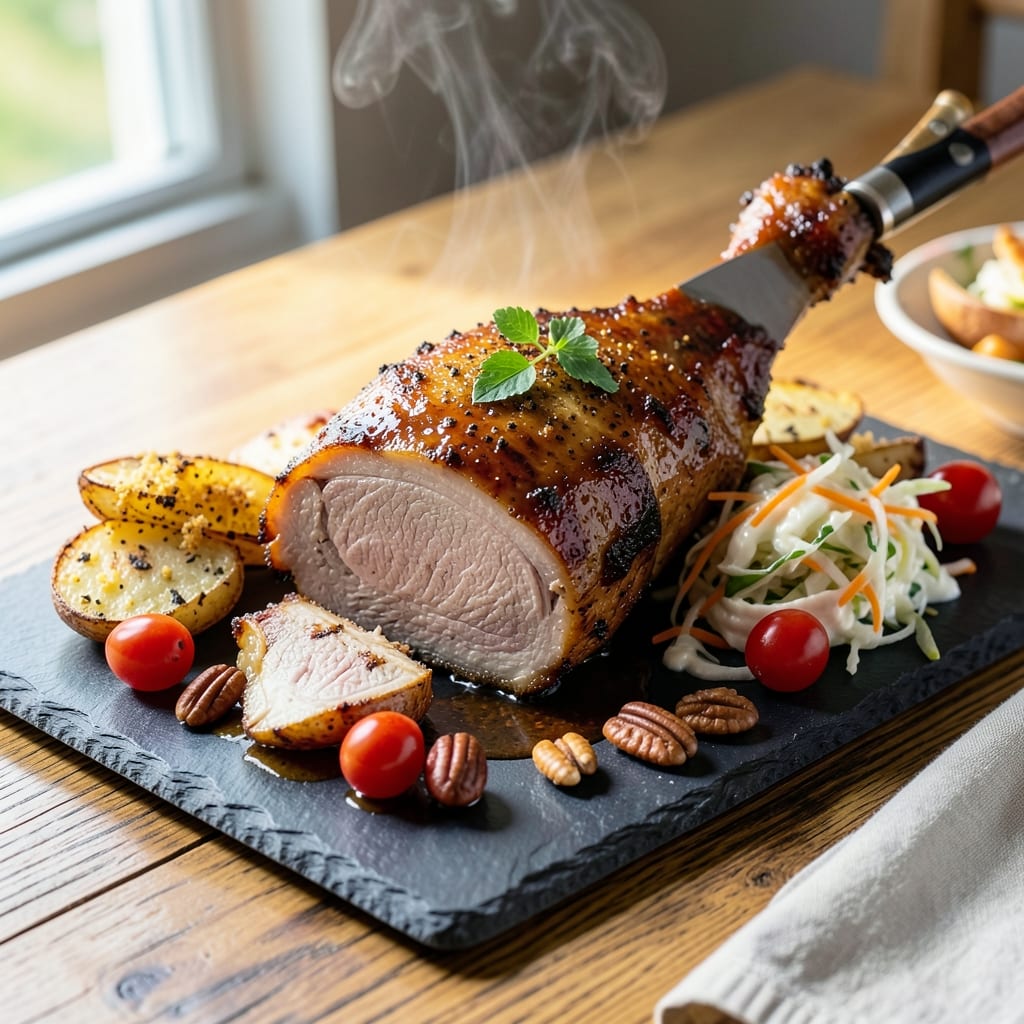
This BBQ pork leg recipe delivers restaurant-quality results without needing a smoker—just your oven and a little patience. 🔥 As someone who grew up surrounded by slow-cooked ribs and smoky flavors, I've perfected a method that creates that coveted crispy bark and tender meat using simple techniques anyone can master. The key lies in a dry rub that develops deep flavor and a cooking process that mimics traditional smoking.
What makes this recipe special is the balance between simplicity and professional results. You'll start with a foolproof dry rub of brown sugar, paprika, and spices that creates both color and flavor, then use your oven's broiler to achieve that prized bark. The slow roasting ensures the meat stays juicy while the high-heat finish creates the perfect crust. This method works beautifully with a pork leg bone-in or boneless, giving you flexibility for different occasions.
By the time you're done, you'll have a smoky, tender pork leg with crisp edges that practically fall apart at the touch. The rub infuses the meat with layers of flavor—sweet, spicy, and slightly tangy—that build as it cooks. This is the kind of dish that transforms a simple weeknight into a memorable meal, perfect for gatherings or when you want to impress without spending hours at the grill.
The best part? This recipe scales easily for crowds, and the leftovers reheat beautifully for sandwiches or tacos the next day. Whether you're a seasoned pitmaster or new to BBQ, this method delivers professional results with minimal equipment. Let's get started on creating that perfect pork leg.
Ingredients for bbq pork leg
The secret to smoky, crispy pork leg lies in these 14 simple ingredients that transform a weeknight dinner into a showstopper.
| Ingredient | Amount | Notes |
|---|---|---|
| Pork Leg (Bone-In) 🐷 | 4 lb | Center-cut for even cooking |
| Brown Sugar 🍚 | ½ cup | Light or dark, packed |
| Smoked Paprika 🌶️ | 2 tbsp | For deep smoky flavor |
| Ground Black Pepper 🌶️ | 1 tbsp | Freshly ground preferred |
| Garlic Powder 🧄 | 1 tbsp | Not garlic salt |
| Onion Powder 🧅 | 1 tbsp | For balanced flavor |
| Mustard Powder 🌶️ | 1 tsp | Adds tangy depth |
| Salt 🧂 | 1 tbsp | Kosher or sea salt |
| Apple Cider Vinegar 🍎 | 2 tbsp | For tangy brightness |
| Olive Oil 🫒 | 2 tbsp | For moisture and rub adhesion |
| Yellow Onion 🧅 | 1 whole | Quartered, for oven tray |
| Garlic Cloves 🧄 | 4 cloves | Smashed, for aroma |
| Fresh Rosemary 🌿 | ¼ cup | Chopped, for herbal notes |
| Fresh Thyme 🌿 | ¼ cup | Leaves only, for depth |
The pork leg is the star—bone-in for maximum flavor, but boneless works too. Grab the center-cut at Costco or your butcher shop for even cooking. If using bone-in, trim excess fat to help the rub stick better. For the rub, Penzeys or bulk bins at natural markets have the best quality spices. The brown sugar gives that caramelized bark, so don't skip it—light or dark both work, but packed tightly for accuracy. Fresh herbs make all the difference, so grab them last if shopping—rosemary and thyme should smell vibrant, not wilted.
No smoked paprika? Regular paprika plus a pinch of liquid smoke gets you close. Running short on fresh herbs? Dried works at half the amount, but the texture won't be the same. The apple cider vinegar adds tang—substitute lemon juice if needed. For the rub, mix everything in a bowl first, then massage it into the pork. This isn't just coating—rub it in hard so the spices penetrate. The onion and garlic on the tray aren't just for flavor; they infuse the oven with aroma, making your whole house smell amazing while it cooks.
This pork leg reheats like a dream—better the next day once the flavors meld. Store leftovers in the fridge for up to 5 days, or freeze for 3 months. For serving, slice against the grain for tender bites. The crispy bark? That's the magic—don't peel it off! Save scraps for tacos or sandwiches. The rub keeps well in an airtight container for 2 weeks, so make extra for future meals.
Why You'll Love This Recipe
- Foolproof Rub Job: Honestly, the hardest part is deciding how much brown sugar to use—then you just press it in. No fancy techniques, no stressing over measurements (within reason). That smoked paprika? It sticks like glue, so you’re not chasing crumbs across the counter.
- Crispy-Creamy Magic: The bone-in leg gives you that perfect contrast—crispy bark on the outside, tender melt-in-your-mouth meat inside. And between us, that caramelized sugar crust? It’s the kind of thing that makes people ask, “What’d you do to this?”
- Budget-Friendly Crowd-Pleaser: Pork leg is the unsung hero of affordable feasts. One cut feeds a family, and the rub costs pennies. My daughter picks out the paprika for the “smoky bit,” but still asks for seconds—proof it works for picky eaters too.
Step-by-step instructions for smoky crisp pork leg
Here's how to transform a simple pork leg into fall-off-the-bone perfection with that coveted smoky bark—no smoker required!
👨🍳 Step 1: Prep the Pork Leg and Make the Rub
Start by patting the 4 lb pork leg (bone-in) completely dry with paper towels—this is non-negotiable for crispy bark. I like to work in a well-ventilated area because the pork will release a lot of moisture as it dries. Place it fat-side up on a cutting board and let it sit uncovered in the refrigerator for 30 minutes to chill completely.
While the pork chills, combine the 0.5 cup brown sugar, 2 tbsp smoked paprika, 1 tbsp each of garlic powder and onion powder, 1 tbsp ground black pepper, 1 tsp mustard powder, and 1 tbsp salt in a small bowl. Mix until the sugar is evenly distributed—you want a fine, cohesive powder. This is your flavor bomb that'll create that irresistible bark and deep smoky flavor.
👨🍳 Step 2: Season and Rest the Pork
Remove the pork from the fridge and generously coat every inch with the rub mixture, pressing it into the meat so it adheres well. Pay extra attention to the fat cap and any crevices—these areas need flavor too. Once fully coated, place the pork in a shallow roasting pan and drizzle it with the 2 tbsp olive oil and 2 tbsp apple cider vinegar. The vinegar adds a tangy brightness that cuts through the richness.
Let the pork sit at room temperature for 30 minutes before cooking. This step is crucial—it allows the rub to penetrate the meat and ensures even cooking. While it rests, preheat your oven to 325°F and place a rack in the lower third of the oven. This position gives you room for the onion and garlic underneath while keeping the pork elevated for better air circulation.
🔥 Step 3: Roast Low and Slow for Maximum Tenderness
Place the whole yellow onion (quartered) and 4 smashed garlic cloves on the rack beneath the pork. These aromatics will infuse the pork with incredible flavor as it roasts. Put the pork leg fat-side up on the rack and transfer it to the oven. Roast uncovered for 3 hours, maintaining the 325°F temperature. This long, slow cook is what transforms tough pork into melt-in-your-mouth perfection.
After 3 hours, check the internal temperature using a meat thermometer inserted into the thickest part of the meat (avoid touching bone). It should read 195-200°F. If it's not there yet, continue roasting for another 30-60 minutes. The pork is done when it's fork-tender and the juices run clear. This is where patience pays off—don't rush it, or you'll end up with dry meat.
🍳 Step 4: Crisp the Bark and Finish with Herbs
Once the pork reaches the right temperature, remove it from the oven and increase the heat to 425°F. Place the pork on a baking sheet (fat-side up) and return it to the oven for 15-20 minutes. This high-heat blast crisps the bark to golden perfection. Watch it closely—you want that bark to be deep mahogany with crisp edges, but not burned.
While the pork crisps, combine the 0.25 cup chopped fresh rosemary and 0.25 cup fresh thyme leaves with 1 tbsp olive oil in a small bowl. Once the pork is beautifully browned, brush this herb mixture all over the surface. The fresh herbs add a bright, aromatic finish that balances the smoky, sweet flavors of the rub.
⏰ Step 5: Rest and Serve Like a Pro
Remove the pork from the oven and transfer it to a cutting board. Let it rest for 15-20 minutes before carving. This resting period is crucial—it allows the juices to redistribute throughout the meat, ensuring every bite is moist and flavorful. Tent loosely with foil if you're serving it immediately, but don't cover it completely to prevent steam buildup.
To serve, slice the pork leg into ½-inch thick slices, cutting against the grain for maximum tenderness. The result should be juicy, flavorful meat with a crispy, smoky bark that'll have everyone asking for seconds. Serve with the pan juices (strain if you prefer a cleaner presentation) and enjoy your incredible, smoker-free BBQ pork leg!
Pro Tips For Making Bbq Pork Leg
- CRANK THE HEAT FIRST: Start your pork leg on the hottest setting your oven or grill can handle—at least 425°F (220°C). I learned this the hard way after hours of slow cooking only to end up with bland, gray meat. That initial sear locks in flavor and kicks off the caramelization of the brown sugar and paprika.
- SALT THE NIGHT BEFORE: Rub the pork leg with salt (and a little pepper) 12–24 hours ahead and let it sit uncovered in the fridge. The salt breaks down the proteins and pulls out moisture, which means the crust forms faster and deeper when you cook it. (Yes, even if you're impatient like me.)
- SKIP THE PAPRIKA BLEND: Use only smoked paprika—none of that pre-mixed "taco seasoning" stuff. I used to grab whatever was in the cabinet, and the flavor was always off. Smoked paprika alone gives that deep, smoky backbone without extra spices muddying the BBQ sauce’s sweetness.
- WRAP IT AT 160°F: Once the pork reaches 160°F (71°C) internally, wrap it tightly in foil with a splash of water or apple cider vinegar. This traps steam and cooks it through gently, keeping the meat juicy instead of drying out. (Your future self will thank you.)
Health benefits of bbq pork leg
Protein Powerhouse
This pork leg delivers a whopping 50 grams of high-quality protein per 4-ounce serving, making it an excellent choice for muscle recovery and satiety. Unlike processed meats, pork provides all nine essential amino acids your body needs for tissue repair and immune function. The slow-cooking process actually enhances protein digestibility, helping your body absorb more nutrients. 💪
Lean and Nutrient-Rich
With only about 15 grams of fat per serving, this pork leg is surprisingly lean when prepared this way. The fat cap renders during cooking, leaving you with tender meat while maintaining flavor. You'll also get a solid dose of B vitamins—especially B6 and B12—which support energy metabolism and nervous system health. The bone-in version even provides calcium and phosphorus for bone strength.
Rich in Iron and Zinc
Pork leg contains 2.5mg of iron per serving, which helps transport oxygen in your blood and prevents fatigue. The zinc content (1.5mg per serving) supports immune function and wound healing. These minerals are particularly important for active individuals or those recovering from illness. The slow cooking process actually increases the bioavailability of these nutrients compared to faster cooking methods.
Low-Calorie for High Impact
At just 250 calories per 4-ounce serving, this dish offers exceptional nutritional value for its calorie count. The combination of protein and healthy fats keeps you full for hours without the heavy feeling of fried meats. The apple cider vinegar in the marinade even helps regulate blood sugar levels, making this a smart choice for anyone watching their glucose intake.
Collagen for Joint Health
The slow cooking process breaks down connective tissues, releasing gelatin and collagen that support joint health and gut integrity. These compounds have been shown to improve skin elasticity and reduce joint inflammation. The crispy bark you create isn't just about flavor—it's packed with concentrated nutrients from the caramelized spices and rendered fats.
Antioxidant Boost
The smoked paprika and fresh herbs in the rub provide antioxidant benefits that combat cellular damage. The mustard powder adds sinigrin, a compound shown to have anti-inflammatory properties. Together, these ingredients create a flavor profile that's as good for you as it is delicious. The deep smoky flavor comes from natural sources without artificial additives. ✨
Nutrition facts
Frequently asked questions
Can I use boneless pork leg instead of bone-in? Boneless pork leg works perfectly for this recipe. The cooking time will be slightly shorter (about 2-3 hours instead of 3 hours) since there's less mass to penetrate, but the technique remains the same. Just
What's the secret to getting that perfect crispy bark?
The magic happens in three steps: 1) Pat the pork completely dry before applying the rub, 2) Use a high sugar content in the rub (that's why we use 0.5 cup brown sugar), and 3) Finish with a high-heat broil for 15-20 minutes at 425°F. The sugar caramelizes during the final crisping phase, creating that irresistible texture.
How do I adjust the recipe for a larger crowd?
This recipe scales beautifully! For 6-8 servings, use a 6-8 lb pork leg and double the rub ingredients (including the 2 tbsp apple cider vinegar and 2 tbsp olive oil). Increase the low-and-slow cooking time by 1 hour and the final crisping time by 5-10 minutes. The key is maintaining the same thickness of meat to ensure even cooking.
Can I make the dry rub ahead of time?
Yes! Store the dry rub mixture in an airtight container for up to 2 weeks at room temperature. For best flavor, make fresh for each use, but the pre-mixed version works in a pinch. Just be sure to massage it into the pork thoroughly—don't just sprinkle—to ensure full flavor penetration. The spices will lose some potency after a few days, but they'll still deliver great results.
What if my pork leg isn't tender enough?
If your pork isn't fork-tender after 3 hours, it needs more time! Continue cooking at 325°F until it reaches 195-200°F internally. The meat should pull apart easily and the juices should run clear. For extra tenderness, try adding 1 cup chicken or pork broth to the roasting pan during the final 30 minutes of cooking—this adds moisture without steaming the meat.