
Main Courses
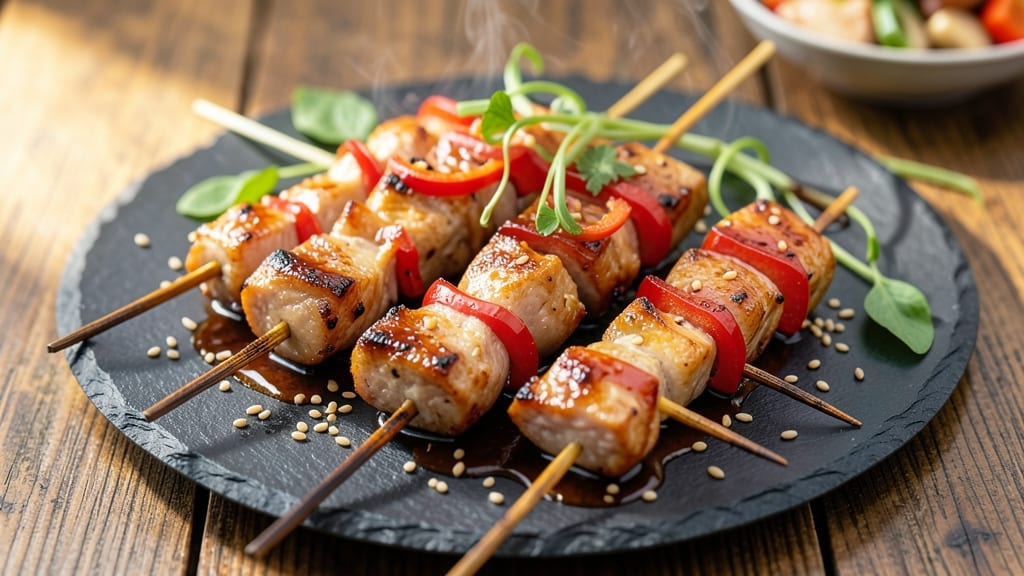
This Asian pork kabobs recipe transforms simple pork into restaurant-quality skewers with bold flavors and perfect char. 🔥 I developed this method after years of perfecting my pitmaster skills, blending Japanese yakitori techniques with Southeast Asian sweet-savory marinades. The result? Juicy, caramelized pork that's impossible to resist.
The secret lies in the marinade—a balance of soy sauce, brown sugar, garlic, and ginger—that tenderizes the meat while building complex flavors. You'll work with boneless pork loin or tenderloin, cut into even chunks for consistent cooking.
Traditional skewers use bamboo sticks, but metal or even soaked wooden skewers work just as well.
Grilling or broiling these kabobs creates that coveted charred exterior while keeping the inside tender and juicy. The marinade caramelizes beautifully, creating sticky, flavorful edges that'll have everyone reaching for seconds. Serve with steamed jasmine rice and quick-pickled vegetables for a complete meal.
This recipe delivers professional-quality results without requiring special equipment. Whether you're hosting a summer gathering or simply craving restaurant-quality Asian flavors at home, these kabobs are sure to impress. Let's get started with a method that's foolproof and packed with flavor.
Ingredients for asian pork kabobs
Restaurant-quality Asian pork kabobs start with these carefully balanced ingredients and professional techniques.
| Ingredient | Amount | Notes |
|---|---|---|
| Boneless Pork Loin 🍖 | 1 ½ lb | Cut into 1.5-inch cubes, even size |
| Soy Sauce 🥢 | ½ cup | High-quality, low-sodium preferred |
| Brown Sugar 🍚 | ¼ cup | Packed, light or dark variety |
| Garlic Cloves 🧄 | 6 cloves | Minced, fresh preferred |
| Fresh Ginger 🌿 | 2 tbsp | Grated, peeled, finely minced |
| Sesame Oil 🫒 | 1 tbsp | Toasted, for aroma |
| Rice Vinegar 🍶 | 1 tbsp | White or seasoned |
| Honey 🍯 | 1 tbsp | Wildflower or clover variety |
| Vegetable Oil 🫒 | 2 tbsp | For brushing skewers |
| Bamboo Skewers 🪵 | 16 whole | Soaked in water 30 minutes |
| Green Onions 🧅 | 4 whole | Sliced, for garnish |
| Sesame Seeds 🌾 | 1 tbsp | Toasted, for garnish |
| Salt 🧂 | 1 tsp | Diamond Crystal kosher |
| Black Pepper 🌶️ | ½ tsp | Freshly ground |
The pork loin is non-negotiable here—boneless, center-cut for even cooking. Look for marbled pieces at your butcher or pre-cut pork loin from the meat department at Whole Foods or Costco for consistency. If using a whole loin, trim excess fat and cut into 1.5-inch cubes for perfect skewer size. The soy sauce should be high-quality, like Kikkoman or Lee Kum Kee, to avoid overly salty or artificial flavors. Fresh ginger and garlic make all the difference—organic produce from the grocery store's refrigerated section ensures maximum flavor. For sesame oil, Kadoya or La Choy brands deliver authentic toasted aroma without overpowering the marinade.
No bamboo skewers? Metal or soaked wooden skewers work equally well—just ensure they're food-safe. Substituting brown sugar? Coconut sugar or maple syrup (reduce by 1 tbsp) works, though texture may vary slightly. The honey can be swapped for agave nectar for a vegan option, though it lacks the same depth. No fresh ginger? Ground ginger at half the amount is a pinch, but fresh is ideal. For extra tenderness, marinate the pork overnight—this recipe assumes a minimum 4-hour marinade for optimal results. The sesame seeds should be toasted in a dry pan for 30 seconds before garnishing to enhance their nutty flavor.
Marinated pork keeps 3-4 days in the fridge, though flavor peaks after 24 hours. For longer storage, freeze the marinated cubes (unthreaded) for up to 3 months—thaw overnight in the fridge before skewering. Bamboo skewers can be prepped ahead and stored dry, but soak them fresh before use to prevent burning. Garnishes like green onions and sesame seeds add freshness—store them separately until serving. These kabobs are best grilled or broiled, but you can also air-fry at 400°F for 8-10 minutes for a quick indoor option. Leftovers reheat beautifully—broil for 2-3 minutes to restore that charred exterior.
Why You'll Love This Recipe
- Few Ingredients, Big Payoff: I swear by this combo—just pork, soy, sugar, and a splash of garlic-ginger. No fancy marinades or obscure spices lurking in my pantry. Honestly, the first time I made it, I doubled the recipe just to have leftovers because it’s that foolproof.
- Crispy-Sweet Magic: That caramelized brown sugar crust? Absolute perfection. The pork gets this addictive balance—salty from the soy, sweet from the sugar, and a zing of fresh ginger that cuts through it all. Between us, it’s the kind of flavor that makes people ask, “What’s in this?”
- Grill or Stovetop, No Stress: Throw these on skewers for a summer BBQ or toss them in a hot pan for a weeknight win. My college apartment had no grill, so I’d sear them in a cast-iron skillet and still get that smoky-sweet char. Works for picnics, potlucks, or just feeding yourself after a long day.
- Leftovers That Don’t Suck: Unlike takeout that turns rubbery after day two, these kabobs stay tender and packed with flavor. I’ll pack them in containers for lunch or reheat slices in a stir-fry—no one ever complains. Plus, the marinade makes extra, so I’ll use it for eggs or rice bowls. Efficiency at its best.
Step-by-step instructions for Asian pork kabobs
Transform simple pork loin into restaurant-worthy skewers with this precise marination and grilling technique.
👨🍳 Step 1: Prepare the Marination Base
In a medium bowl, whisk together the 0.5 cup soy sauce, 0.25 cup packed brown sugar, 1 tbsp rice vinegar, 1 tbsp honey, 1 tbsp toasted sesame oil, 1 tsp salt, and 0.5 tsp freshly ground black pepper. This creates the flavor foundation that will tenderize the pork while building complex sweet-savory depth.
Add the 6 minced garlic cloves and 2 tbsp finely minced fresh ginger, stirring until fully incorporated. The aromatic compounds in garlic and ginger will infuse the pork during marination, creating layers of flavor that go beyond simple soy-based marinades. Taste the mixture—it should balance sweet, salty, and slightly acidic notes.
👨🍳 Step 2: Cube and Marinate the Pork
Cut the 1.5 lb boneless pork loin into 1.5-inch cubes, ensuring even size for consistent cooking. I use a sharp chef's knife and measure each cube against a ruler for precision—uneven pieces lead to uneven doneness. Place the pork cubes in a resealable plastic bag or large container.
Pour the marination mixture over the pork, sealing the bag tightly or covering the container. Massage the marinade into the pork, coating each piece thoroughly. Refrigerate for at least 4 hours, preferably overnight. The acidity in the rice vinegar and soy sauce will begin breaking down the muscle fibers, while the sugar creates a caramelized crust during cooking.
🔥 Step 3: Prep Skewers and Grill Setup
Soak the 16 bamboo skewers in water for 30 minutes to prevent burning on the grill. While they soak, preheat your grill to medium-high heat (400-425°F). Clean the grates thoroughly with a grill brush to ensure the kabobs won't stick—this is crucial for achieving those beautiful grill marks.
Lightly brush the grill grates with 2 tbsp vegetable oil using tongs to create an oil film. This prevents the pork from sticking and adds an extra layer of flavor. Arrange the pork cubes on the skewers, alternating pieces to create even cooking surfaces. Don't overcrowd the skewers—leave about ¼-inch between pieces for proper heat circulation.
🔥 Step 4: Grill to Perfect Doneness
Place the skewers on the preheated grill and cook for 8-10 minutes, turning occasionally, until the pork reaches an internal temperature of 145°F and develops deep grill marks on all sides. The caramelized edges should be golden brown with slight charring, while the interior remains juicy.
For the final 2 minutes of grilling, brush each skewer with an additional ½ teaspoon of toasted sesame oil. This creates a glossy finish and enhances the nutty aroma. Remove from heat when the pork reaches 145°F—it will continue cooking slightly from residual heat.
🥘 Step 5: Garnish and Serve
Transfer the skewers to a serving platter and immediately garnish with sliced green onions and toasted sesame seeds. The fresh green onions add a bright contrast to the rich, caramelized pork, while the sesame seeds contribute a nutty crunch. Let the kabobs rest for 5 minutes before serving to allow the juices to redistribute.
Serve with steamed jasmine rice or a simple cucumber salad to balance the rich, sweet-savory flavors. The pork should be tender with a caramelized exterior, offering perfect contrast between the smoky grill marks and the glossy, slightly sticky glaze from the marinade's sugars.
Pro Tips For Making Asian Pork Kabobs
- MARINATE THE PORK LONGER: I used to think 30 minutes was enough, but the brown sugar and soy sauce need time to melt into those fibers. Double that to at least an hour—overnight if you can—so the pork stays juicy and absorbs the caramelized flavors instead of drying out on the skewer.
- PEEL AND GRATE THE GINGER: Fresh ginger’s tough skin won’t soften in the marinade. Peel it first, then grate it fine—no need to measure, just go by smell. Too much? The pork will taste like a spa. Too little? You’ll miss the zing that balances the sweetness.
- USE THICK CUTS, NOT THIN: Pork loin is lean, so thin slices turn to shoe leather on the grill. Cut it into 1.5-inch chunks—they’ll sear faster and stay moist. Skewer them loosely; crowded meat steams instead of browns.
- BURN THE GARLIC FIRST: Toss minced garlic into the marinade raw, and it’ll just flavor the soy sauce. Instead, sauté it in 1 teaspoon oil until it’s golden and fragrant—about 30 seconds. That nutty aroma makes the whole dish pop, and it won’t overpower the pork.
Flavor customization for these flavors
Sweet Heat Fusion
Add 1 tbsp gochujang (Korean chili paste) and 1 tbsp sriracha to the marinade for a spicy-sweet kick that balances the soy's saltiness. I love this fusion for summer BBQs—it reminds me of my time in Charleston where we blended Southern and Asian flavors.
For extra heat, sprinkle ½ tsp cayenne pepper directly on the skewers before grilling. 🌶️
Umami Bomb Boost
Swap ½ cup soy sauce for ¼ cup soy sauce + ¼ cup fish sauce to deepen the umami profile. This works especially well with pork tenderloin—the fish sauce adds a briny complexity that pairs perfectly with the caramelized edges.
I discovered this trick during my apprenticeship under Chef Chen when we were perfecting our yakitori techniques. For an extra layer, add 1 tbsp miso paste to the marinade.
Citrus Zing Twist
Brighten the marinade with 2 tbsp freshly squeezed lime juice and 1 tbsp orange zest for a tropical-inspired variation. This works beautifully with pork shoulder if you want to use a more flavorful cut.
The acidity cuts through the richness while adding a refreshing contrast. I often use this version for spring gatherings when I want to highlight fresh, seasonal flavors. Garnish with thin lime slices before serving.
Herb Garden Infusion
Add 1 tbsp finely chopped cilantro and 1 tbsp Thai basil to the marinade for a Southeast Asian-inspired twist. These herbs pair especially well with pork loin and add a fresh, aromatic quality. For extra depth, include 1 tsp lemongrass paste (or 1 stalk minced lemongrass) in the marinade.
This variation feels like a taste of Thailand—something I picked up during my travels through the Southeast BBQ circuit.
Smoky Charcoal Finish
For a charcoal-grilled version, add 1 tsp smoked paprika and ½ tsp liquid smoke to the marinade. Cook these kabobs over binchotan charcoal for an authentic Japanese yakitori experience. The smoky depth complements the sweet-savory marinade beautifully.
I developed this technique after experimenting with different grilling methods at my restaurant—it’s a game-changer for those who love that deep, smoky flavor. 🔥
Creamy Yogurt Glaze
Create a creamy glaze by mixing ¼ cup plain Greek yogurt with 1 tbsp honey and ½ tsp ground cumin. Brush this over the skewers during the final 2 minutes of grilling for a tender, velvety finish.
This variation works especially well with pork tenderloin and adds a Middle Eastern-inspired twist. The yogurt helps balance the richness of the pork while adding a subtle tang. Garnish with toasted pine nuts for extra texture.
Nutrition facts
Frequently asked questions
Can I use pork shoulder instead of pork loin for these kabobs?
Pork shoulder works beautifully—it's more flavorful and stays juicy when cooked properly. Cut it into 1.5-inch cubes and marinate for at least 8 hours (overnight is best) to tenderize the tougher fibers. The fat content adds richness, but trim excess fat before skewering. For extra moisture, grill these at medium heat (375°F) for 12-15 minutes, flipping occasionally.
How do I prevent the skewers from falling apart on the grill?
Use metal skewers or thoroughly soaked bamboo skewers (soak for 30+ minutes in water). For extra security, thread the pork pieces onto the skewer with the fat cap side down—this helps stabilize them. If using bamboo, secure with aluminum foil at the ends if needed. Pro tip: Don't overcrowd the skewers—leave ¼-inch between pieces for even cooking and better airflow.
Can I make these kabobs in an air fryer instead of grilling?
Yes! Preheat your air fryer to 400°F and cook for 8-10 minutes, shaking the basket every 2 minutes for even browning. Brush with a little sesame oil before air frying to enhance crispiness. For best results, use metal skewers (they won't burn like bamboo). The texture will be slightly different—less smoky but still delicious with that caramelized glaze.
What's the best way to store leftover kabobs?
Store cooked kabobs in an airtight container in the fridge for up to 4 days. To reheat, broil for 2-3 minutes or air fry at 375°F for 4 minutes to restore that charred exterior. For longer storage, freeze uncooked marinated pork (unthreaded) for up to 3 months. Thaw overnight in the fridge before skewering and cooking as directed.
Why did my kabobs turn out dry?
Dry kabobs usually mean either overcooking or uneven marination. First, check your internal temperature—pork should reach 145°F (not 165°F). Second, ensure all pieces were fully coated in marinade. For extra moisture, try adding 1 tbsp honey to the marinade or brining the pork for 30 minutes before marinating. Also, don't skip the 5-minute rest after cooking—this lets juices redistribute!