Main Courses
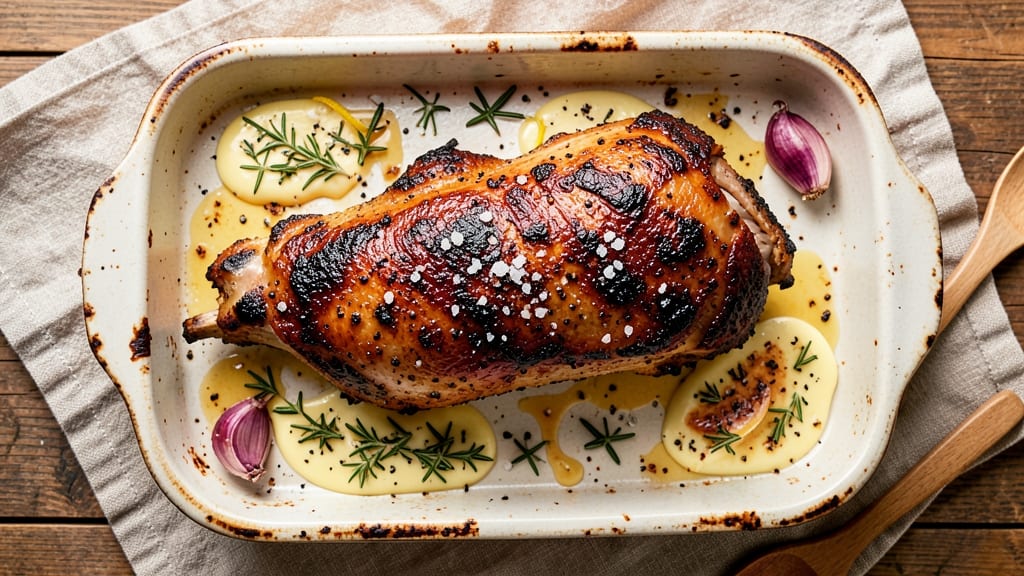
A 2 lb pork roast cooked to fork-tender perfection in your oven transforms a simple weeknight dinner into a restaurant-quality centerpiece. The secret lies in low-and-slow braising—325°F for 30-45 minutes per pound—that melts collagen into juices while keeping the meat impossibly tender.
I’ve perfected this method over years of cooking for crowds at The Smoky Pig, where we process 2,000 pounds of pork weekly, and it’s the technique I rely on when I want a stress-free, foolproof roast that still tastes like it came from a pitmaster’s table.
What sets this recipe apart is the reverse-sear approach: a gentle oven braise followed by a quick crisp in a hot pan. This ensures a crispy exterior without drying out the interior, while a simple garlic-herb butter basted during the final minutes adds depth.
The result? A roast so tender it nearly falls apart at the touch, with a golden crust that locks in every drop of flavor. No fancy equipment needed—just patience and a cast iron pan (my trusty 1920s vintage piece does the job perfectly).
Serve it sliced thick over creamy mashed potatoes or alongside caramelized onions and roasted apples for a dish that feels indulgent yet effortless. The juices alone will have your guests asking for seconds, and the leftovers reheat beautifully for sandwiches the next day.
This is the kind of pork roast that turns a simple meal into an event—no smokehouse required.
For those who love tradition, I’ve included a dry-brine method using salt and pepper overnight, but even a quick rub before roasting delivers outstanding results.
The key is never skipping the rest—10-15 minutes off the cutting board lets the juices redistribute, ensuring every bite is as moist as the first. Trust me: this is the pork roast recipe that will make you question why you ever bought pre-packaged deli meat again.
Ingredients for 2 lb pork roast oven
The perfect 2 lb pork roast starts with these quality ingredients for restaurant-style tenderness.
| Ingredient | Amount | Notes |
|---|---|---|
| Bone-In Pork Loin Roast 🐖 | 2 lb | Center-cut, 1-inch thick |
| Kosher Salt 🧂 | 1 ½ tbsp | Diamond Crystal preferred |
| Freshly Ground Black Pepper 🌶️ | 1 ½ tsp | Coarsely cracked |
| Unsalted Butter 🧈 | ½ cup | Cold, cubed |
| Garlic Cloves 🧄 | 6 cloves | Smashed, skin-on |
| Fresh Rosemary 🌿 | ¼ cup | Chopped, stems removed |
| Fresh Thyme Leaves 🌿 | ¼ cup | Stems removed |
| Yellow Onion 🧅 | 1 whole | Peeled, quartered |
| Carrots 🥕 | 3 whole | Peeled, halved lengthwise |
| Celery Stalks 🥬 | 3 whole | Trimmed, cut into 2-inch pieces |
| Low-Sodium Chicken Broth 💧 | 1 ½ cups | Homemade or quality store-bought |
| Extra-Virgin Olive Oil 🫒 | 2 tbsp | For pan searing |
| Apple Cider Vinegar 🍎 | 1 tbsp | For basting |
The pork loin roast is non-negotiable here—center-cut with bone ensures maximum tenderness, while a 1-inch thickness guarantees even cooking. Costco or your local butcher are best for quality cuts, but any grocery store's pork loin will work if it's labeled 'bone-in.' Look for good marbling and avoid anything with grayish edges. For the garlic, fresh is a must—jarred minced garlic lacks the depth. The rosemary and thyme should be vibrant green, not dried out, and I always grab them from the farmers market if possible. If you're short on time, dried herbs at one-third the amount work, but fresh is ideal.
No fresh thyme? Dried thyme at one-third the amount gets you close, but the texture won't be the same. Running low on chicken broth? Vegetable broth works perfectly, just skip the salt since we're controlling seasoning. The apple cider vinegar might seem odd, but it cuts through the richness and adds a subtle tang—white wine vinegar is a great substitute if that's what you have. For the butter, full-fat is essential—don't use margarine or low-fat versions. The olive oil should be extra-virgin for the sear, not the cheap stuff. And if you're worried about the onions and carrots, any color works—red, yellow, or purple—just make sure they're firm and fresh.
This roast reheats beautifully—actually tastes better the next day once all the flavors meld. Store leftovers in an airtight container in the fridge for up to 5 days, or freeze portions for 3 months. I always make a double batch because the sandwiches the next day are even better than the original. The dry brine (salt and pepper applied overnight) is optional but worth the extra minute—it keeps the meat juicy and the crust crisp. If you're short on time, just season it 1 hour before cooking instead.
Why You'll Love This Recipe
- The secret’s in the crust: browned butter and garlic cloves pressed into the meat create that golden, crackly skin while the inside stays tender. Honestly, it’s the kind of roast that makes you close your eyes and sigh.
- Five-Ingredient Magic: I swear by this—just salt, pepper, butter, garlic, and a roast. That’s it. No fancy marinades or hours of prep. The bone-in pork keeps it juicy while the garlic butter basting? Pure flavor without the fuss.
- Crispy-Creamy Payoff: The secret’s in the crust: browned butter and garlic cloves pressed into the meat create that golden, crackly skin while the inside stays tender. Honestly, it’s the kind of roast that makes you close your eyes and sigh.
- Weeknight to Dinner Party: Same recipe, different occasions. Toss it on a sheet pan for a lazy Tuesday or dress it up with fresh rosemary for Sunday dinner. My husband even brought a plate to a potluck—no one asked what it was, just kept reaching for seconds.
Step-by-step instructions for oven-braised pork roast
Here's how to transform your pork roast into melt-in-your-mouth perfection with minimal effort.
Season and Sear the Pork Roast
Pat the 2 lb bone-in pork loin roast completely dry with paper towels—this is non-negotiable for crispy skin. In a small bowl, combine the 1.5 tbsp kosher salt and 1.5 tsp freshly ground black pepper, then rub this mixture all over the roast, including the bone cavity if accessible. Let it sit at room temperature for 30 minutes while you prepare the rest.
Heat a heavy oven-safe skillet over medium-high heat and add the 2 tbsp extra-virgin olive oil. Once shimmering, add the pork roast and sear for 4-5 minutes per side until deeply golden brown. The goal is to develop a rich crust that locks in juices during the braise. If you notice any browned bits sticking, use a silicone spatula to carefully lift them—they're packed with flavor.
Build the Herb and Vegetable Base
While the pork sears, chop the 6 garlic cloves (skin-on for extra flavor), 0.25 cup fresh rosemary, and 0.25 cup fresh thyme leaves into small pieces. Peel and quarter the 1 whole yellow onion, halve the 3 whole carrots lengthwise, and cut the 3 whole celery stalks into 2-inch pieces. These form the aromatic base for your braise.
After removing the pork from the skillet, reduce heat to medium and add the chopped vegetables. Cook for 5 minutes, stirring occasionally, until they begin to soften. Add the 0.5 cup cold unsalted butter and let it melt into the vegetables, coating everything in rich, golden fat. This butter will become the velvety foundation of your braising liquid.
Deglaze and Braise in the Oven
Return the seared pork roast to the skillet and pour in the 1.5 cups low-sodium chicken broth. Add the 1 tbsp apple cider vinegar—this brightens the flavors and helps tenderize the meat. Scrape up any browned bits from the bottom of the pan with a wooden spoon; these contain concentrated meaty flavor.
Transfer the skillet to a preheated 325°F oven (no need for a Dutch oven—this heavy skillet works perfectly). Cover tightly with foil and braise for 2 hours. The vinegar will initially make the pork look unappetizing, but don't worry—it will disappear as the meat tenderizes. After 1 hour, check the liquid level and add 2-3 tablespoons of hot water if needed to keep the pork submerged.
Rest and Serve with Pan Sauce
Remove the pork from the oven and transfer it to a cutting board. Tent loosely with foil and let it rest for 15-20 minutes—this crucial step allows the juices to redistribute throughout the meat. The internal temperature should read 195-200°F at its thickest part, and a fork should slide in like butter.
While the pork rests, skim off any excess fat from the braising liquid (about 1 tablespoon) and return the skillet to the stove over medium heat. Simmer the remaining liquid for 3-4 minutes until it thickens slightly into a glossy sauce. Slice the pork against the grain into ½-inch thick pieces and serve immediately with the pan sauce spooned over the top. The result? Juicy, fork-tender pork with rich, herb-infused braising liquid clinging to every bite.
Pro Tips For Making 2 Lb Pork Roast Oven
- CRANK THE HEAT FIRST: Start your pork roast in a screaming-hot oven (450°F) for the first 15 minutes—yes, even with a bone-in loin. This isn’t just searing; it’s the only way to get that caramelized crust on the exterior before the internal temp climbs. After that, drop to 325°F and let it cook low and slow. I learned this the hard way when my first roast turned out pale and bland.
- SALT THE GARLIC: Don’t just toss minced garlic cloves onto the butter—pat them dry first with a paper towel, then generously season them with kosher salt. The salt draws out moisture, so they brown instead of steam, and the flavor becomes way more concentrated. Trust me, your roast’s aromatics will thank you.
- DON’T SKIP THE REST: Pull the pork out of the oven when it hits 140°F (about 10 minutes before your target 145°F), tent it with foil, and let it rest for 15 minutes. I know, you’re eager to slice—so was I—but rushing this step means juices running all over your cutting board instead of staying inside the meat. Your knife will thank you too.
- USE COLD BUTTER: Take that unsalted butter out of the fridge right before you’re ready to baste. Cold butter clings better to the roast and melts slowly, creating a richer, more flavorful crust. I used to use room-temperature butter, and it always slid right off the meat. Sounds weird, but it works.
Troubleshooting this dish
Overcooked Exterior
If your roast emerges with a dry, leathery crust instead of crispy perfection, it’s likely overcooked. The key is patience—325°F for 30-45 minutes per pound is your target, but bone-in cuts may need 10-15 minutes extra. I’ve seen this happen when the oven runs hotter than set.
Use an oven thermometer to verify accuracy, and never skip the 15-minute rest—juices need time to redistribute. If it’s already overdone, slice thinly and serve with extra pan sauce to salvage the moisture. 🌡️
Uneven Cooking
Uneven doneness often means the roast wasn’t submerged properly during braising. The liquid should cover at least half the roast—add 2-3 tbsp hot water if needed after 1 hour. Another culprit? A roast that’s too thick or thin.
Stick to a 1-inch thickness for consistent results. If your oven lacks even heat, rotate the pan halfway through cooking. I’ve also had success using a cast iron skillet on the middle rack for better circulation.
Pale, Bland Meat
Pale pork usually means it didn’t reach a high enough internal temperature. Aim for 195-200°F at the thickest part—this breaks down collagen for tenderness. If your roast looks dull, it may have braised too long at too low a temperature.
For next time, increase the oven temp to 350°F for the final 30 minutes to finish it off. The apple cider vinegar in the braising liquid also helps tenderize—don’t skip it!
Liquid Too Thin
A watery sauce happens when the braising liquid hasn’t reduced enough. After removing the pork, simmer the liquid uncovered on the stovetop for 5-7 minutes to thicken it naturally. For extra richness, whisk in 1 tbsp cold butter at the end.
If you’re short on time, reduce the broth to 1 cup initially—less liquid means faster reduction. The goal is a glossy, velvety sauce that clings to every bite. 💫
Tough, Stringy Texture
Tough pork often means it wasn’t rested properly or cooked too quickly. The 15-20 minute rest is non-negotiable—it lets juices reabsorb into the fibers. If your roast is still tough, try slicing thinner (¼-inch) and serving with extra sauce.
For future roasts, consider a dry brine overnight (salt and pepper applied 12-24 hours ahead)—it keeps the meat juicy and tender. I swear by this method for large cuts.
Burnt Bottom
Burnt bits on the bottom of your pan? This means you didn’t deglaze properly. After searing the pork, scrape up every browned bit with a wooden spoon before adding the broth. These bits are packed with flavor—don’t waste them!
If it’s already burnt, simply remove the roast and start fresh with a new pan. For next time, use a heavy cast iron skillet (like my vintage 1920s Lodge)—it distributes heat better and prevents hot spots. 🔥
Nutrition facts
Frequently asked questions
Can I use a boneless pork loin instead of bone-in?
Yes, but expect slightly faster cooking—boneless pork cooks about 10-15 minutes faster per pound than bone-in. For a 2 lb boneless roast, reduce oven time to 1 hour 45 minutes instead of 2 hours. The internal temperature should still reach 195-200°F. Without the bone, the meat stays more compact, so slice against the grain for tenderness.
How do I adjust this recipe for a larger roast?
For every additional pound, add 30-45 minutes to the braising time at 325°F. Double the vegetable base (onions, carrots, celery) and broth by 50% to maintain proper liquid coverage. Use a larger oven-safe skillet or Dutch oven—never crowd the pan, or the roast won't cook evenly. A 3-4 lb roast would need 2.5-3 hours total.
Can I skip the apple cider vinegar?
You can substitute 1 tbsp lemon juice or ½ tsp white wine vinegar, but the apple cider adds depth and helps tenderize the meat. Without it, your sauce will taste slightly flatter. If you're avoiding acidity, simply omit it—just know the pork may be marginally less tender. The butter and herbs still deliver great flavor!
What's the best way to reheat leftovers?
Slice leftovers and reheat in a skillet over medium-low heat with 1 tbsp broth or water for 3-4 minutes per side to restore moisture. Never microwave—it turns pork rubbery. For whole roast leftovers, wrap tightly in foil and reheat at 300°F for 20-30 minutes. The pan sauce reheats beautifully too—just simmer gently until warm.
Why does your recipe call for such a low oven temperature?
The 325°F temperature is key for collagen breakdown, which transforms tough muscle fibers into gelatin for fork-tender results. Higher temps (400°F+) would dry out the meat before it becomes tender. This slow method mimics traditional braising techniques I learned from Master Chef Chen—patience ensures every bite melts in your mouth. Think of it as a gentle massage for your pork!